
As the lead SEO strategiest, perhaps the one question that I get asked more than others is: “How long will it take to get to the first page of Google?”
Well, let’s say, this question has no right answer. As search engines and capabilities continually evolve, catering to the user and online publisher needs, only Google Engineers working behind-the-scenes know what’s really happening. It is like Coca-Cola’s secret recipe that has remained one of the most heavily guarded trade secrets in the world.
How Search Works: A Brief Introduction
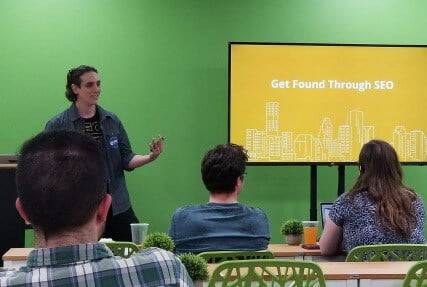
Figure: Matt Cutts from Google talking in the video How Search Works.
Google ranking systems are made up of not one, but a whole series of algorithms.
To providers its users with the most useful information, Google considers more than 250 factors, including the words of your query, relevance, and usability of pages, the expertise of sources, and your location and settings.
Besides, the algorithms behind it meet high standards of relevance and quality within the ambit of a new program called “PageRank” – which measures a page’s importance through various metrics.
That means, no two websites, even in the same industry, are considered equal.
With so many factors at play, it’s nearly impossible to predict what will make or push one website to be better than the other.
While this is probably not the answer you are looking for, let me give you a simple comparison:
“Can anyone accurately predict where a stock price will go in 90 days?”.
No.
Similarly, it’s complex to give an accurate answer to whether your site will start ranking immediately. You cannot accurately predict this either.
However, most subject-matter experts agree that it typically takes four to six months to start seeing results.
“You might begin seeing improvements in organic ranking and an increase in traffic for keyword topics with little competition in just a few weeks. On the other hand, moderately competitive topics might takes months, while highly competitive phrases could even take one year or more!” – Search Engine Journal
“… it takes 4 to 6 months to start seeing results… SEO results grow over time.” – Forbes
SEO is Not a Sprint, But a Marathon

SEO is not something that happens overnight or even within a month. I understand it’s not easy to be patient in the world of Amazon Prime and same-day delivery. Many companies and business owners want to see results from their SEO campaigns right away.
They may even question their investment if campaigns are working because they may not see any movement in ranking for weeks altogether. But the truth is, even the best-executed SEO strategies take time to show results. You have to trust the process and your marketing partner to allow efforts to come to fruition. For example, we recently had a lawyer-client where we put in over 50 hours on their initial SEO campaign. Google “sandboxed” them and won’t let them rank on the first page as they have never ranked before for that term.
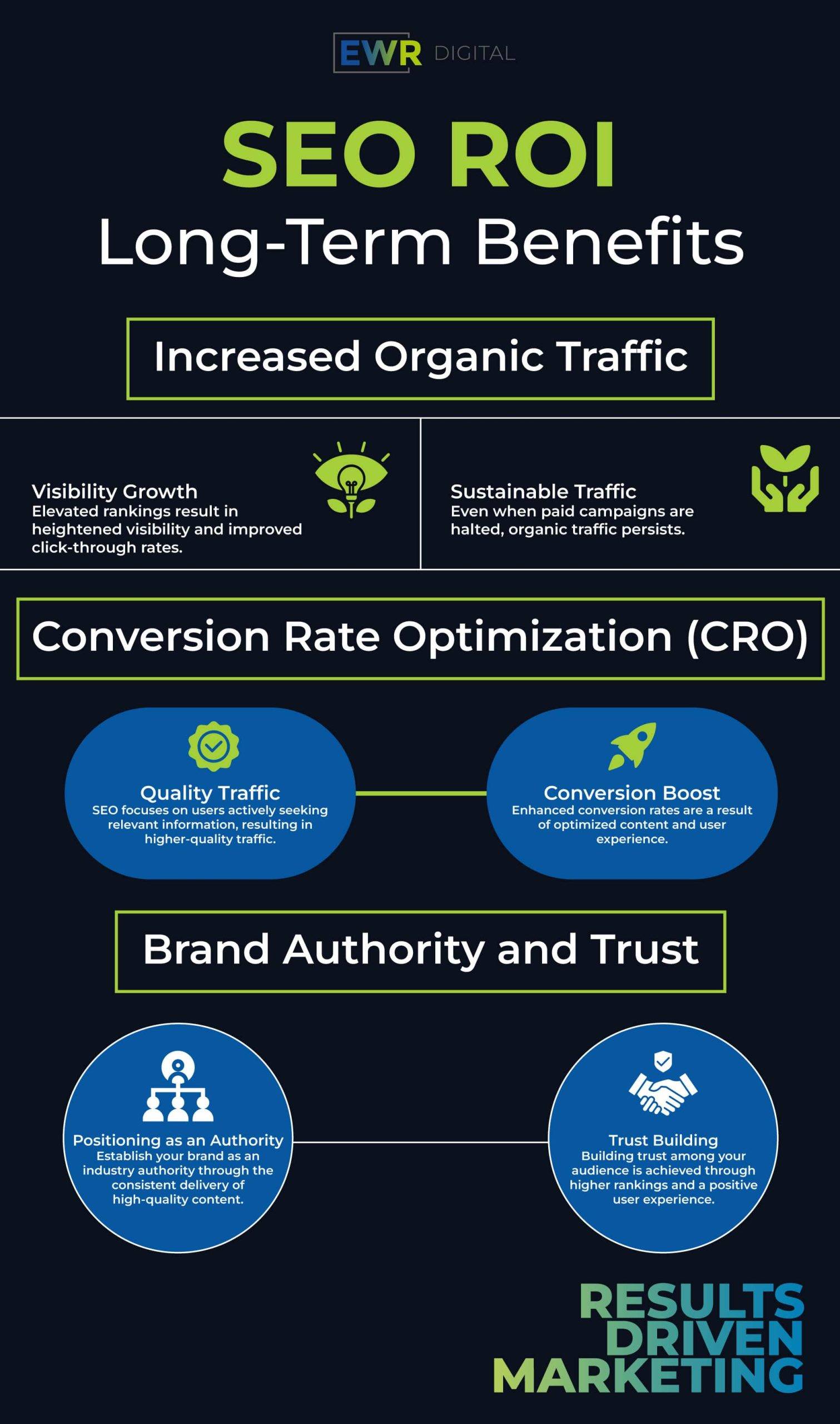
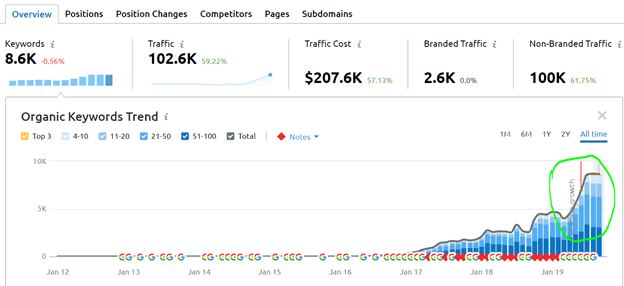
Then on Day 92 suddenly they shot up to the first page, and then the number one position and stayed there for over six months! Remember, SEO is an investment. Think of SEO as your online traffic 401k. Your efforts begin to compound gradually over time and deliver greater and higher returns for the longer you continue.
Many business owners underestimate how much time, effort, and money it may take to be successful with Search Engine Optimization. Success rarely comes within the first couple of months.
In fact, I’ve seen companies quit before they even start. After the first month, I find them saying or thinking,
- “What are we getting for all this money?”
- “I don’t see this working.”
- Or “The cost does not justify the results we are getting.”
If that’s what you’re also thinking, then probably you’re not ready to do SEO. That’s simply because you have unrealistic expectations of what can be achieved or may even not have the budget to invest in running an effective SEO campaign. Again, SEO is a marathon, not a sprint.
After having worked on hundreds of different internet marketing campaigns, the one thing I have consistently seen is that SEO speaks RESULTS for those who stick with it. SEO is the one most significant investment that I believe a business can make. I have seen it provide a 28x return over Pay-Per-Click advertising alone!
How Does the SEO Process Work
A 4-6 month SEO plan typically includes a series of activities and optimizations aimed at improving a website’s organic visibility and search engine rankings.
Here is a typical example of what your solid SEO effort in the first few months may look like:
Initial Website Audit and Keyword Research (Month 1-2):
Campaign Kickoff. Project Discovery. Competitive Evaluation. Keyword Research. Site Audit. Analytics & Onboarding.
-
- Conduct a comprehensive audit of the website to identify technical issues, on-page optimization gaps, and opportunities for improvement.
- Perform keyword research to identify relevant keywords and phrases that have search volume and align with the website’s target audience and goals.
- Analyze competitors’ websites and their SEO strategies to identify areas where the website can gain a competitive edge.
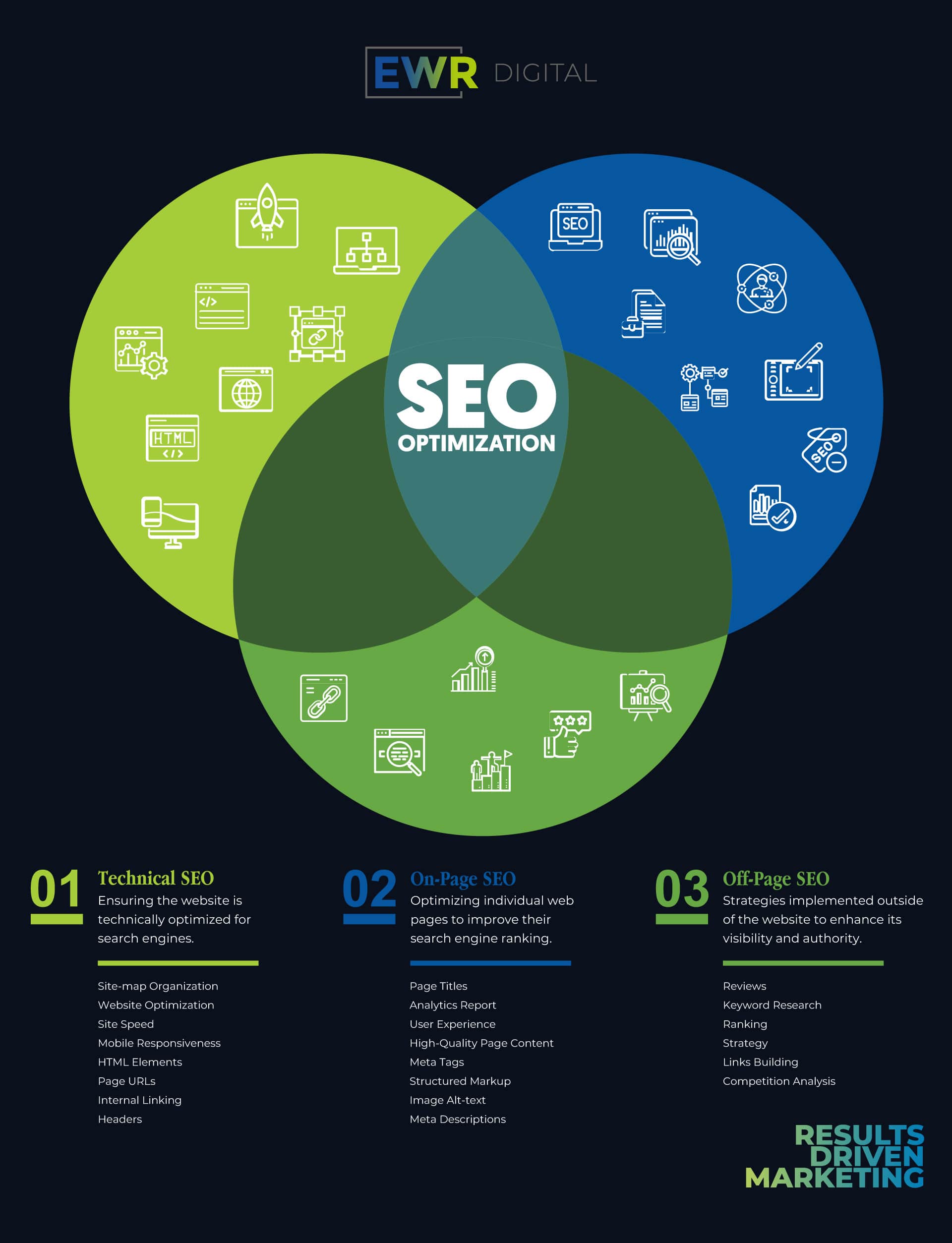
We also start Technical SEO, which includes Site Speed, Image Compression, Sever Changes, SiteMap, and Indexing, to name a few. (Core Web Vitals) If you are not in all green it’s a penalty!
Technical SEO:
-
- Address technical issues identified in the initial website audit, such as broken links, crawl errors, duplicate content, and XML sitemap and robots.txt optimization.
- Implement structured data markup (schema markup) to enhance search engine understanding of the website’s content and improve visibility in search results.
- Ensure proper indexing and crawling of the website by search engine bots.
We are also starting some backend site architecture such as Categories and Tags, Meta Descriptions, and Menu structure.
All these things are hard to see on the surface but are extremely important, and it takes time to realize its full benefit to your website.
Content Creation and Optimization (Month 3-4):
Content Strategy and Implementation. On-page Content Creation, Optimization, Blogs, Outreach, Press Releases, and well as better defining the buyer’s journey if that hasn’t already been mapped out.
- Develop a content strategy based on keyword research and target audience interests.
- Create high-quality, informative, and engaging content, such as blog posts, articles, videos, or infographics, optimized for targeted keywords and user intent.
- Optimize existing website content to align with targeted keywords and improve its relevance and visibility.
Along with Content Creation and Delivery we focus on Hyper-Local SEO. Ongoing Improvements to the site with additional pages such as Location Pages, FAQ, *Whitepapers, and *Downloadables.
Off-page SEO will then kick into high gear, which includes Link Building, Outreach.
- Conduct outreach and build relationships with relevant websites, influencers, and industry publications to earn high-quality backlinks to the website.
- Promote content through social media channels and other online platforms to attract natural backlinks and increase brand visibility.
- Monitor and disavow any toxic or low-quality backlinks that could potentially harm the website’s SEO efforts.
By this month, you should hopefully see incremental improvements in your rankings, traffic, and leads.
It depends on where you are starting. If you’ve never been on the first few pages, you will not see significant improvements yet. That’s because Google didn’t even associate you with those terms, so that is the first step.
Link Building and Off-Page SEO (Month 4-5):
At this point, we will work to build your online brand presence through syndication. You will start benefiting from a focus on On-page Conversion Optimization on the pages that are getting the most traffic.
The efforts to improve the traffic you’re receiving converts into leads or sales.
The formula you should be thinking :
New Leads = “Targeted Traffic” + “High Converting Page”
Your traffic and leads will start picking up. Your overall activities can vary greatly depending on what type of company you are (B2C vs. B2B) and what kind of hosting and website framework you are on. So trust the process. And trust the company you work with. Ask for deliverables if you are unsure of what is happening.
Here at EWR Digital, we are staying abreast with new strategies through industry best practices and educating our customers through our weekly the, “Best SEO Podcast“.
By continually looking at the competitive and changing landscape, we re-evaluate, steer focus, and reengineer our creative SEO strategies to get you the traffic + rankings you want to grow your digital footprint. SEO works holistically over months, not weeks, and not just based on a handful of parameters. When working hand in hand with business owners getting their feedback and completion, the information loop is when clients really start seeing the results they expected.
Local SEO Roadmap
Local SEO focuses on optimizing a website or online presence to improve visibility and rankings in local search results. It aims to attract potential customers in a specific geographic location who are searching for products or services relevant to a local business. Here’s a general outline of a 4-6 month local SEO plan:
-
Google Business Profile Optimization (Month 1):
- Claim and verify the business’s Google Business Profile (GBP) listing.
- Complete and optimize the GMB profile with accurate business information, including name, address, phone number (NAP), website URL, categories, business hours, and photos.
- Encourage customers to leave reviews on the GMB listing.
-
Local Keyword Research (Month 1):
- Identify local keywords that potential customers might use to find products or services in the target area.
- Conduct keyword research using tools like Google Keyword Planner, Google Trends, or other SEO keyword research tools.
- Focus on keywords with local intent, such as “best pizza in [city]” or “plumber near me.”
-
On-Page Optimization with Local Focus (Month 2):
- Optimize website pages with targeted local keywords in meta tags, headers, URLs, and content.
- Create location-specific landing pages or service area pages if the business serves multiple locations.
- Ensure consistent NAP information across the website, including the contact page and footer.
-
Local Directory Listings and Citations (Month 2):
- Submit the business’s information to reputable local directories and citation websites, such as Yelp, Yellow Pages, and industry-specific directories.
- Ensure NAP consistency across all directory listings.
- Seek opportunities to get listed in local business associations, chambers of commerce, and other relevant local organizations.
-
Online Reputation Management (Month 3):
- Monitor and respond promptly to customer reviews on platforms like Google, Yelp, and other review websites.
- Encourage satisfied customers to leave positive reviews.
- Address any negative reviews or customer feedback professionally and constructively.
-
Local Link Building (Month 4-5):
-
- Focus on acquiring high-quality backlinks from local and industry-related websites. Reach out to local businesses, organizations, and influencers to explore collaboration opportunities, guest posting, or link exchanges. Ensure that the links are relevant and natural.
- Actively engage with your local audience on social media platforms. Share local news, events, promotions, and customer testimonials. Respond to comments, messages, and reviews promptly to build a positive online reputation.
Ongoing Analysis and Reporting (Throughout the plan):
-
- Monitor website performance using analytics tools to track key metrics such as organic traffic, keyword rankings, and conversion rates.
- Analyze data and make data-driven decisions to refine and optimize the SEO strategy.
- Provide regular reports to stakeholders to demonstrate progress and the impact of SEO efforts.
If you are wanting to start a new SEO campaign or just need a second look of what your company is currently doing – feel free to reach out to one of our consultants at EWR Digital for a free 20-minute consultation or me. I would encourage you to find a trusted SEO Agency and get started, you are missing all the traffic that you didn’t know that you could get!