


Introduction
Local SEO is no longer optional; it’s essential. Whether you’re a plumber in Houston, a law firm in Dallas, or a national chain with multiple locations, showing up in local searches determines whether you win or lose customers. According to Google, 46% of all searches have local intent, and with the rise of “near me” and voice searches, local SEO is more competitive than ever.
In today’s digital landscape, customers expect to find nearby businesses instantly, complete with accurate information, reviews, and directions. If your business doesn’t appear in the Local Map Pack, or on the first page of Google for relevant searches, you’re likely losing leads to competitors who do.
Local SEO helps bridge the gap between online visibility and real-world foot traffic. It ensures your business appears when potential customers are actively searching for products or services in your area. This includes optimizing your Google Business Profile, building local citations, earning positive reviews, and ensuring your website’s on-page SEO aligns with your location and service keywords.
In this guide, we’ll cover exactly what Local SEO is, why it matters for every type of business, and the most effective strategies to dominate local search results in 2025 and beyond. Whether you’re a small business owner or managing multiple locations, mastering Local SEO can dramatically improve your visibility, credibility, and customer conversions.
Local SEO isn’t about tricks or quick hacks. It’s about helping Google clearly understand who you are, what you do, and the local communities you serve. The businesses that show up consistently in the Map Pack are the ones that demonstrate real presence and real trust — both online and offline.
At EWR Digital, our approach is shaped by direct training with the former Head of Google’s Business Profile department, the team responsible for how local business listings are evaluated and ranked. That experience gives us a practical understanding of what actually influences visibility in local search — not theories or outdated SEO advice recycled on marketing blogs.
Over the past two decades, we’ve worked with local businesses, multi-location brands, and professional service firms to build strong, durable local visibility by focusing on the signals Google cares about most:
-
Clear and accurate business information across maps and directories
-
Consistent brand identity across the web
-
Meaningful customer reviews and reputation patterns
-
Verified location and service-area structure that reflects real operations
-
Active, ongoing engagement that shows the business is alive and trusted
This is the difference between being listed and being chosen.
Local SEO works when your digital presence reflects your real-world reputation.
That’s the foundation we build from.
What is Local SEO?
Local SEO (Search Engine Optimization) is the process of improving your business’s visibility in local search results. Unlike traditional SEO, which focuses on ranking nationally or globally, Local SEO ensures that people in your immediate area can easily find your business when they search for the products or services you offer.
It helps your business show up in several key areas of search:
1. Google Maps Pack (Local 3-Pack)
The Google Maps Pack, also known as the Local 3-Pack, is the set of three business listings that appear at the very top of local search results, usually below paid ads but above organic results.
-
Example: If someone searches “emergency plumber near me”, Google will show a map and three local plumbing businesses.
-
Why it matters: Appearing in the Local 3-Pack dramatically increases clicks, calls, and visits to your business.
-
How to rank: Optimize your Google Business Profile, gather positive reviews, and keep your Name, Address, and Phone (NAP) details accurate across all platforms.
2. Organic Local Results
These are the standard listings that appear under the map pack. Unlike the 3-Pack, organic results don’t appear in the map box but are still location-specific.
-
Example: A blog post titled “Best Coffee Shops in Dallas” or a service page like “Plumbing Services in Houston, TX”.
-
Why it matters: Organic rankings bring in long-term, sustainable traffic and allow you to target multiple locations or services with optimized content.
-
How to rank: Publish location-based service pages, add local keywords, and build local backlinks from directories, news outlets, and community organizations.
3. Voice Search Queries
Voice search has exploded with the rise of digital assistants like Siri, Alexa, and Google Assistant. People now speak queries instead of typing them, which changes how searches are structured.
-
Example: Instead of typing “pizza Houston”, someone might ask, “Where’s the best pizza place near me?”
-
Why it matters: Voice searches are often local, and intent-driven people are ready to take action.
-
How to rank: Use conversational content, include FAQ sections, and implement structured data (schema) to help search engines understand and feature your answers.
4. Geographic Signals (The Key Difference from Traditional SEO)
Traditional SEO focuses heavily on content, backlinks, and keyword optimization to rank broadly. Local SEO, however, adds geographic relevance into the mix. Search engines determine how local your business is by analyzing signals like:
-
Google Business Profile → Your verified business listing with address, hours, and reviews.
-
Local Backlinks → Links from nearby businesses, local news sites, and community organizations.
-
Citations → Mentions of your business (with NAP consistency) on directories and third-party sites.
-
Localized Content → Pages or blog posts targeting specific neighborhoods, cities, or regions.
These signals tell Google that your business isn’t just relevant, it’s also nearby and trusted by the local community.
Together, these elements, Maps Pack, Organic Local Results, Voice Search, and Geographic Signals form the foundation of Local SEO and explain how it helps businesses win customers in their area.
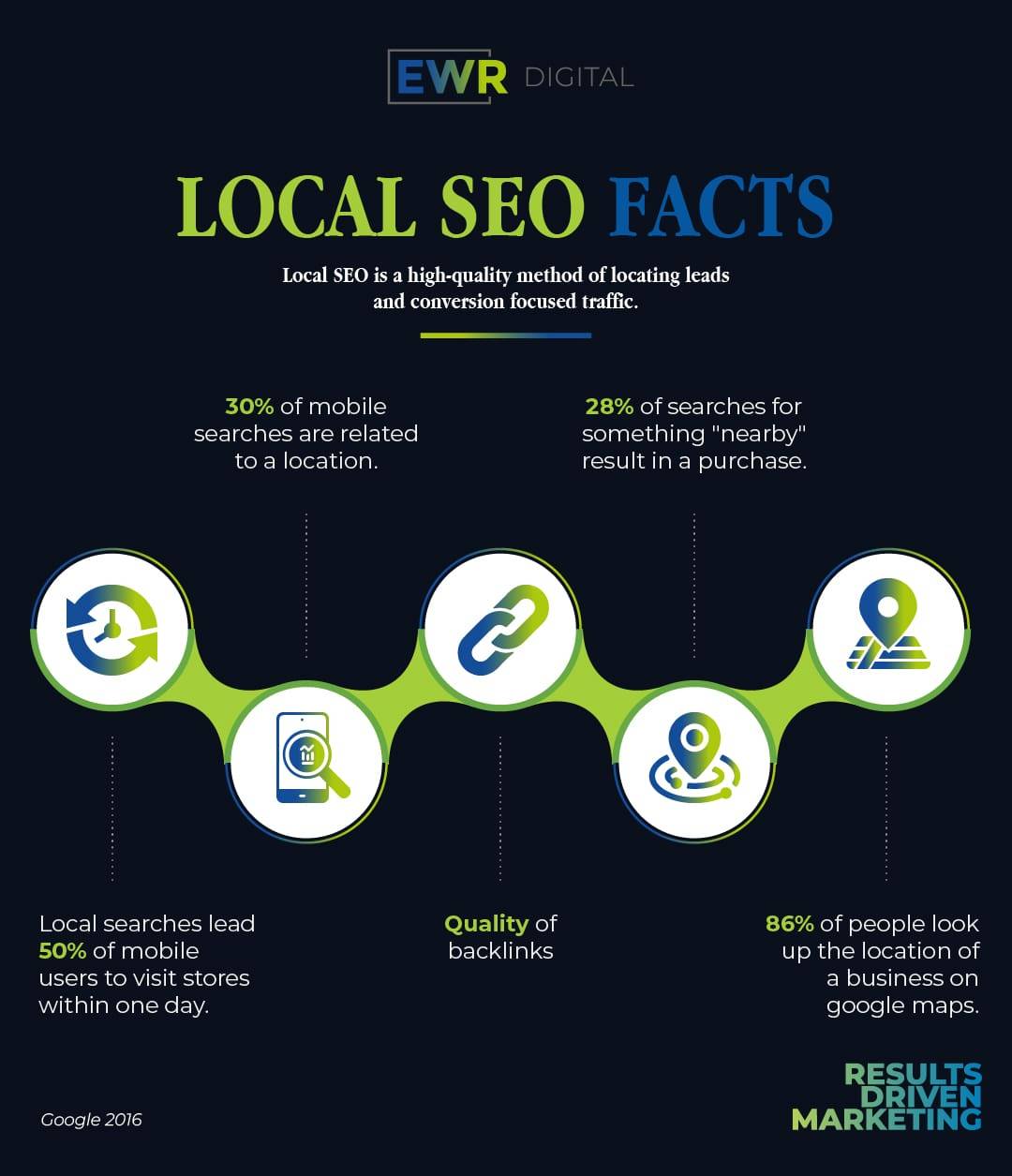
Why Local SEO Matters in 2025
The way customers search for businesses is changing rapidly, and Local SEO is now one of the most critical marketing strategies for any business that relies on local customers. Here’s why it matters more than ever in 2025:
1. Mobile-First World → Over 70% of Local Searches Happen on Mobile
Smartphones have completely changed how people find local businesses. Instead of flipping through directories or asking friends for referrals, customers simply pull out their phone and search for what they need on the go.
- Example: A user searching “coffee shop near me” while walking downtown is likely to visit one of the top results immediately.
- Why it matters: If your business isn’t optimized for mobile-friendly design, fast load times, and local search visibility, you risk losing customers to competitors who are.
- Action step: Ensure your website is responsive, loads in under 3 seconds, and provides easy-to-click call buttons, maps, and directions for mobile users.
2. Conversion-Ready Traffic → Local Intent Searches Convert 80% Higher
Local SEO doesn’t just bring traffic, it brings the right kind of traffic. People searching locally are often ready to make a purchase or take action right away.
- Example: Someone searching “emergency plumber in Houston” at 11 pm isn’t casually browsing; they’re ready to call and hire immediately.
- Why it matters: These searches have high purchase intent, meaning they’re far more valuable than broad informational queries like “what is plumbing.”
- Action step: Optimize your service pages with clear calls-to-action (CTAs) such as “Call Now,” “Book an Appointment,” or “Get a Free Quote Today.”
3. Competitive Advantage → If You’re Not Ranking Locally, Competitors Are Taking Your Leads
Local SEO is no longer optional; it’s a competitive necessity. Every business that wants local customers is fighting for the same spots in the Local 3-Pack and organic search results.
- Example: Two HVAC companies in the same area may offer the same services, but the one that appears in the Google Maps 3-Pack will get the majority of calls.
- Why it matters: If your business doesn’t appear in local results, you’re essentially handing leads to competitors who do.
- Action step: Invest in Google Business Profile optimization, reputation management, and local link building to secure visibility before competitors push you out.
4. Voice and AI Search → Assistants Like Siri, Alexa, and ChatGPT Are Changing Local Discovery
Voice search and AI-powered assistants are becoming mainstream, and most voice queries are local by nature. People often use voice search when they’re driving, cooking, or multitasking, times when they want quick, direct answers.
- Example: A person might say, “Hey Siri, find the best Italian restaurant near me” instead of typing it into Google.
- Why it matters: Voice results are usually limited to the top one or two businesses, making competition even tighter than traditional search.
- Action step:
- Optimize your content with conversational keywords (how people actually speak).
- Add FAQ sections to answer common local queries.
- Use schema markup so AI assistants can easily understand and deliver your business information.
In short, Local SEO in 2025 is crucial because it meets customers where they are on mobile, in urgent buying situations, in competitive markets, and through AI-driven searches. Businesses that invest now will dominate visibility, leads, and trust in their local markets.
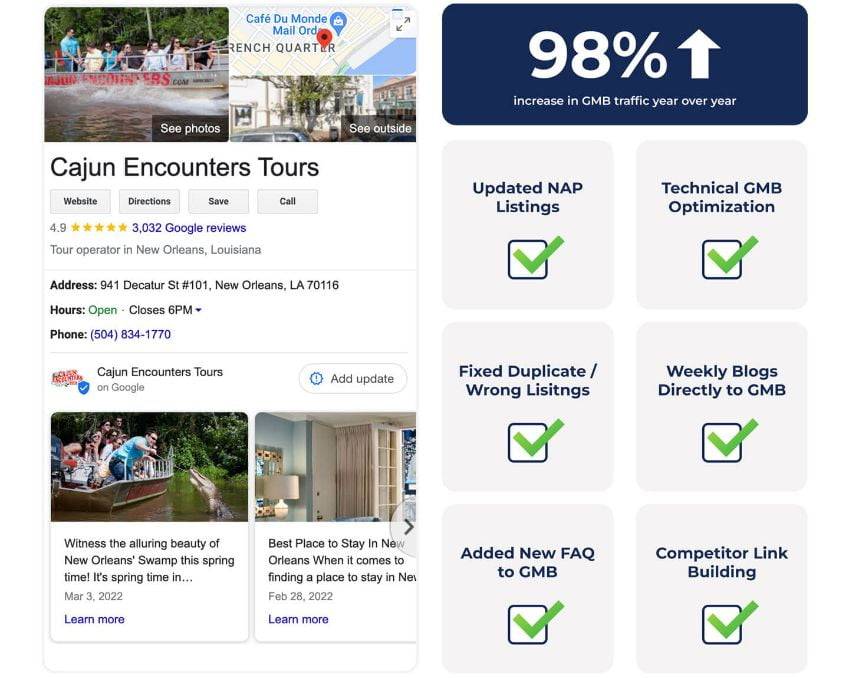
The Core Elements of Local SEO
1. Google Business Profile (GBP) Optimization
Your GBP is your most important local ranking factor.
- Claim and verify your profile.
- Add accurate NAP (Name, Address, Phone) details.
- Upload high-quality images of your business.
- Post updates, offers, and FAQs.
- Encourage reviews and respond to them.
2. Local Citations and Directory Listings
Consistency is key. Make sure your NAP information matches across:
- Yelp
- Apple Maps
- Bing Places
- YellowPages
- Industry-specific directories
3. On-Page Local SEO
Optimize your website with:
- Local keywords (“emergency plumber in Houston”)
- Location-specific service pages
- Schema markup (LocalBusiness, FAQPage, Service)
- Embedded Google Maps
4. Reviews and Reputation Management
Reviews impact both rankings and trust. Encourage satisfied customers to leave reviews on Google, Yelp, and Facebook.
5. Local Link Building
Earn links from:
- Local news outlets
- Chambers of commerce
- Industry associations
- Local bloggers and influencers
Advanced Local SEO (AEO, Local SEO, SEO)
1. Answer Engine Optimization (AEO)
AI-powered search engines and voice assistants rely on structured data and concise answers.
- Use the FAQ schema.
- Provide clear, conversational answers on service pages.
- Optimize for featured snippets.
2. Local SEO
Create localized landing pages that target service areas:
- Example: “Plumbing Services in Sugar Land” vs. “Plumbing Services in Houston.”
- Publish city-specific blogs with real examples.
- Highlight local awards, case studies, and testimonials.
3. Technical & Mobile SEO
- Fast load speeds
- Mobile-first design
- Secure HTTPS
- Crawlable local pages with proper site structure
Local SEO for Plumbers (Industry Example)
Plumbing companies are one of the biggest beneficiaries of Local SEO. Most homeowners search online for “emergency plumber near me” instead of relying on referrals.
Steps for Plumbers to Rank Locally:
- Create service-specific pages (Drain Cleaning, Water Heater Repair, Leak Detection).
- Add geo-modifiers (e.g., “Water Heater Repair in Dallas, TX”).
- Use local schema markup for services.
- Collect before/after project photos and upload them to GBP.
- Encourage reviews after every completed job.
Example: A Houston plumber who optimized their Google Business Profile and added service-area pages saw a 65% increase in calls within 3 months.
Common Local SEO Mistakes to Avoid
- Using inconsistent NAP details.
- Ignoring negative reviews.
- Creating thin duplicate location pages.
- Not tracking results with Google Analytics & Google Search Console.
Tracking and Measuring Local SEO Success
- Google Business Insights → track calls, directions, profile visits.
- Google Search Console → track impressions and clicks from local queries.
- Rank Tracking Tools → monitor local keyword positions.
- UTM Parameters → measure GBP traffic in Google Analytics.
The Future of Local SEO (2025 and Beyond)
Local SEO is evolving rapidly as technology and user behavior change. Search engines are becoming smarter, devices are more interactive, and customer expectations are higher. Here are the major trends shaping the future of Local SEO in 2025 and beyond:
1. AI-Powered Search Results → More Voice-Based and Conversational Searches
Artificial Intelligence (AI) is transforming how people interact with search engines. Instead of typing short keywords, users are asking full questions in a natural, conversational style.
- Example: Instead of typing “best dentist Houston”, a user might ask “Who is the best-rated dentist near me open right now?”
- Why it matters: Search engines powered by AI (like Google’s Search Generative Experience or ChatGPT-style search) are pulling answers directly from websites that provide clear, structured, and conversational content.
- How to prepare:
- Add FAQ sections that answer questions directly.
- Use structured data (schema) so search engines can easily read your content.
- Write content in a natural, question-and-answer format that mirrors how people speak.
2. Zero-Click Searches → More Answers Appearing Directly in SERPs
Zero-click searches happen when Google provides the answer directly on the search results page, meaning the user doesn’t need to click a website to find what they’re looking for.
- Example: When someone searches “plumber near me”, Google might show business listings, phone numbers, reviews, and directions without requiring a click.
- Why it matters: While fewer people may click through, the businesses featured in these results get higher visibility and credibility.
- How to prepare:
- Optimize for featured snippets and People Also Ask questions.
- Ensure your Google Business Profile is complete and accurate so details appear directly in search results.
- Use local schema markup to feed search engines structured information about your services, hours, and reviews.
3. Hyper-Local Targeting → Neighborhood-Level SEO Will Dominate
Search results are getting more precise, focusing not just on cities but even specific neighborhoods, blocks, or zip codes.
- Example: Instead of ranking for “plumber in Dallas”, businesses may need to target “plumber in Oak Lawn Dallas” or “plumber near Bishop Arts District.”
- Why it matters: Customers increasingly expect results that are ultra-local; they want businesses only minutes away.
- How to prepare:
- Create location-specific service pages targeting neighborhoods and suburbs.
- Add geo-modifiers (street names, landmarks, local events) into your content.
- Build backlinks from local community sites, schools, and events in your area.
4. Integration with AR/VR → Local Businesses in Immersive Search Experiences
Augmented Reality (AR) and Virtual Reality (VR) are shaping how people explore businesses before visiting. In the future, local search will become more immersive.
- Example: A customer searching for a restaurant could use AR maps to see the restaurant’s storefront, menu highlights, and reviews overlaid on their phone screen while walking down the street.
- Why it matters: Businesses that embrace AR/VR will stand out and provide engaging experiences that influence customer choices.
- How to prepare:
- Upload high-quality images, 360° photos, and videos to your Google Business Profile.
- Create virtual tours of your location so users can “walk through” before visiting.
- Stay updated with Google Maps AR features and other immersive technologies.
In summary, the future of Local SEO will be defined by AI-driven search, instant answers, hyper-local precision, and immersive AR/VR experiences. Businesses that adapt early will dominate local visibility and customer trust.
Frequently Asked Questions About Local SEO
1. What is Local SEO, and how is it different from traditional SEO?
Local SEO focuses on optimizing your business to appear in searches from people in your area, such as “plumber near me” or “coffee shop in Dallas.” Unlike traditional SEO, which targets national or global audiences, Local SEO prioritizes Google Maps Pack, local keywords, and geographic signals.
2. How can my business rank in the Google Local 3-Pack?
To appear in the Google Maps 3-Pack, you need a fully optimized Google Business Profile, consistent NAP (Name, Address, Phone) details, high-quality reviews, and localized content. Adding photos, posting updates, and building local backlinks also help improve rankings.
3. Why are reviews important for Local SEO?
Reviews directly impact both search rankings and customer trust. Businesses with more positive, recent reviews are more likely to rank higher and attract clicks, calls, and visits. Always encourage happy customers to leave reviews on Google, Yelp, and other directories.
4. How does voice search affect Local SEO?
Voice searches like “best dentist near me” or “who fixes AC in Houston right now” are highly local and intent-driven. To rank for them, optimize your website with conversational keywords, add FAQ sections, and use schema markup so AI and voice assistants can understand your business details.
5. What are the most common Local SEO mistakes businesses make?
Some of the biggest mistakes include inconsistent NAP details across directories, ignoring negative reviews, having thin or duplicate location pages, and failing to track results. Fixing these issues ensures stronger visibility and credibility.
6. How long does it take to see results from Local SEO?
Most businesses start seeing noticeable improvements in 3–6 months, depending on competition, location, and the strength of their SEO strategy. Consistent optimization of your Google Business Profile, website content, and local backlinks accelerates results.
Work with the Top Local SEO Agency
Winning in local search isn’t just about keywords; it’s about trust, visibility, and showing up when customers need you most. At EWR Digital, we specialize in Local SEO strategies that put your business in the Google Maps Pack, boost organic rankings, and capture ready-to-convert local traffic.
From Google Business Profile optimization to hyper-local content and link building, our team helps businesses dominate their local markets and turn searches into sales.
Whether you’re a plumber in Houston, a law firm in Dallas, or a multi-location enterprise, we’ll create a Local SEO strategy that drives measurable growth.
Book your free discovery call today and see how we can take your local visibility to the next level.