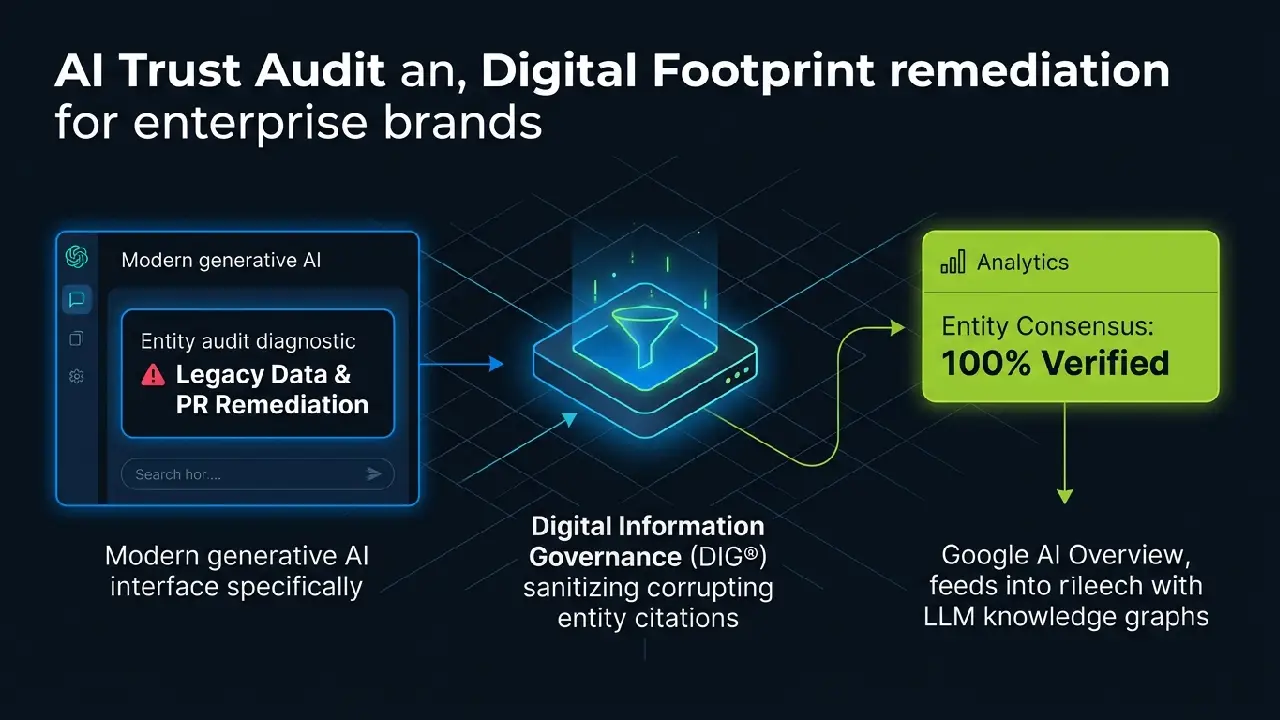
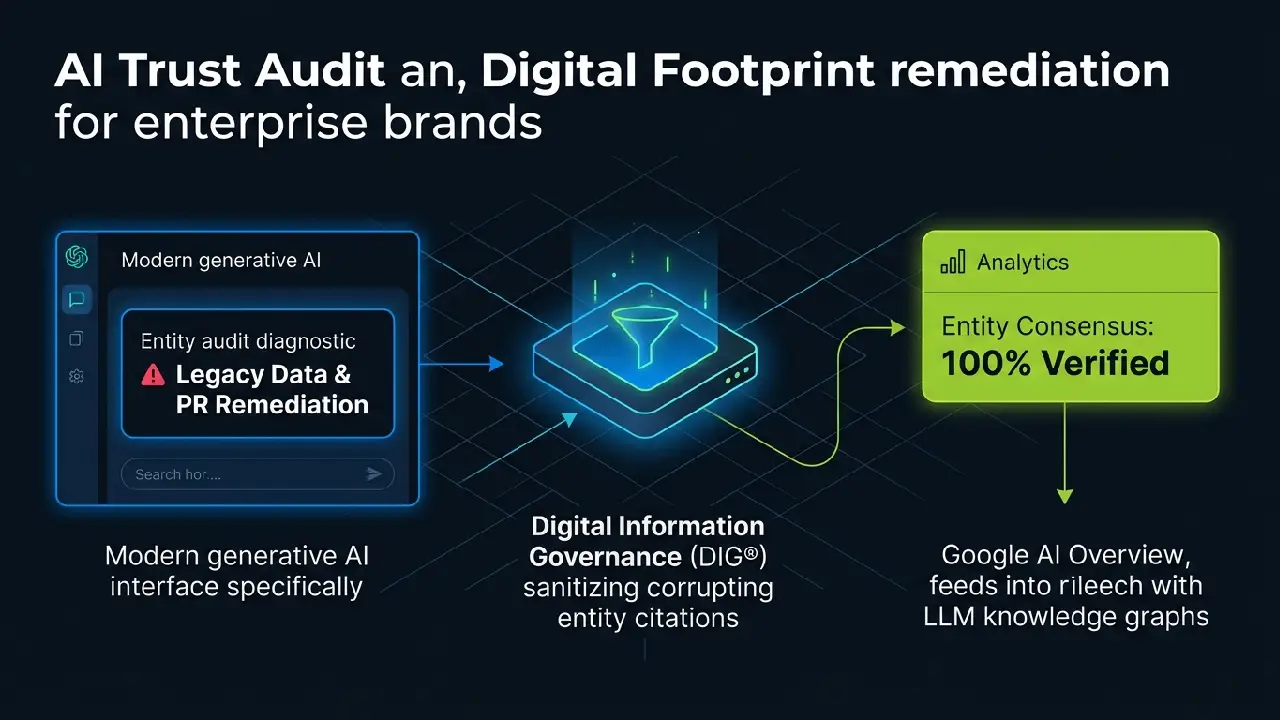
Executive Summary: Modern generative search engines continuously index and recycle legacy web data, causing outdated product names, uncorrected PR, or obsolete business information to surface directly in AI Overviews and chat answers. Conducting an AI trust audit provides enterprise organizations with a structured methodology to trace corrupting source nodes, update foundational entity data, and deploy positive data saturation strategies to align search summaries with current corporate reality.
When generative search platforms synthesize answers about your organization, they do not evaluate your brand in real-time isolation. Large language models (LLMs) parse decades of historical crawl data across news portals, forum discussions, and legacy directory listings. If your enterprise underwent a rebrand, retired software lines, or navigated an old public relations issue, generative engines can repeatedly recycle these obsolete assets into conversational search results. To stop algorithmic hallucinations and safeguard brand authority, corporate leaders must execute targeted digital reputation management strategies to clean up obsolete digital footprints across the machine-readable web.
When prospective enterprise clients submit zero-click research queries to AI engines regarding your service reliability or corporate history, outdated digital trails silently damage deal velocity before a sales representative ever enters the room. Cleaning up these digital footprints requires moving beyond traditional public relations to directly address how search crawlers ingest, weight, and summarize public entity data.
Understanding How AI Search Engines Recirculate Outdated Entity Data
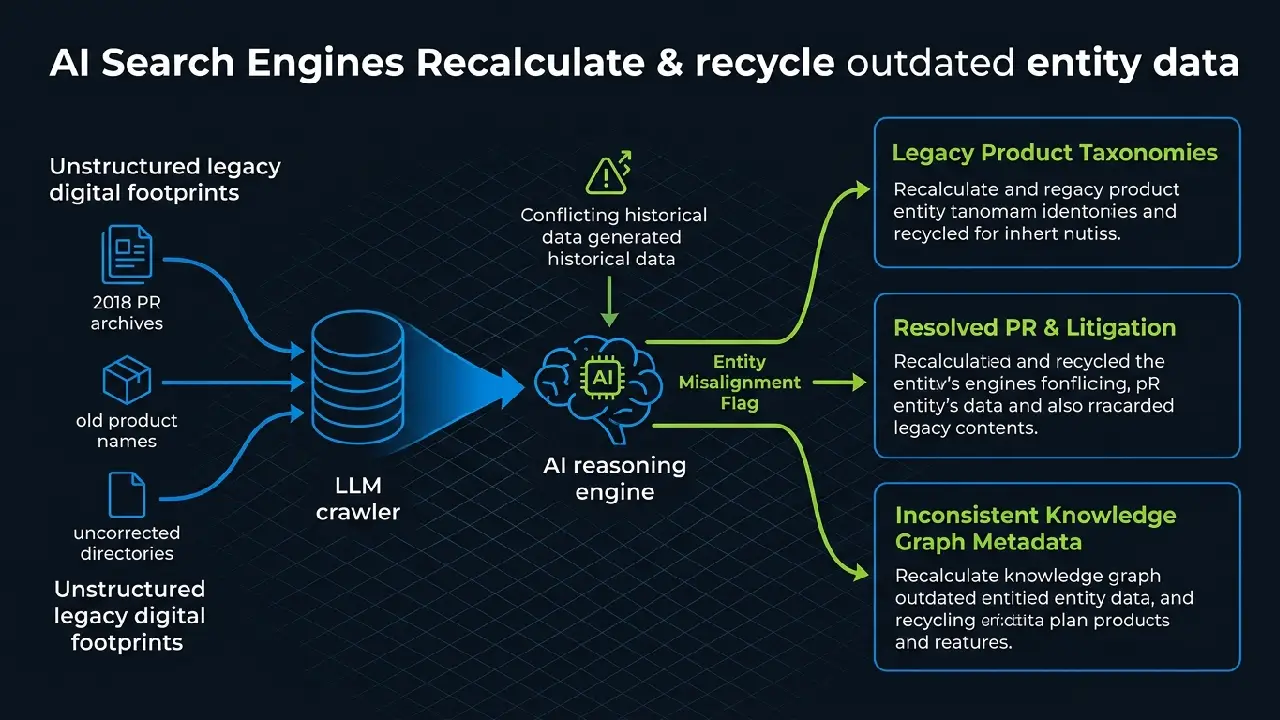
Traditional search engines present web results as discrete links, allowing human users to assess the publication date and context of each site independently. In contrast, generative search modules build synthetic answers by combining semantic data clusters from multiple crawled web nodes into a single authoritative paragraph. If uncorrected historical references remain across trusted external platforms, the AI assigns high confidence to those repeated data patterns regardless of their age.
This persistent recycling of legacy information creates structural risks for growing B2B organizations. Common enterprise triggers include:
- Legacy Product Names and Taxonomies: AI platforms recommending retired software suites or attributing outdated feature sets to active offerings.
- Historical Litigation and Resolved PR Issues: Settled legal matters or old operational disruptions presented as ongoing, active corporate liabilities.
- Inconsistent Corporate Metadata: Contradictory executive leadership lists, former headquarters locations, or pre-merger entity names polluting corporate Knowledge Graphs.
The Tactical Guide to an AI Cleansing Campaign
Remediating an outdated digital footprint requires a systematic “AI Cleansing Campaign.” This process involves isolating corrupting data sources, updating foundational entity nodes, and flooding the web ecosystem with verified, structured factual data to override legacy training inputs.
1. Executing a Comprehensive Multi-LLM Brand Audit
Before launching remediation efforts, map out every location where AI models synthesize inaccurate brand details. Query major LLM interfaces, including Google AI Overviews, ChatGPT, Claude, and Perplexity, with high-intent, targeted prompts.
Test specific vulnerability vectors using questions such as: “What are the common complaints about [Company Name]?”, “Is [Legacy Product] still supported?”, or “Who is the parent company of [Company Name]?” Document all hallucinated facts, outdated entity connections, and cited source URLs into a centralized audit ledger to prioritize remediation targets.
2. Sanitizing Internal Web Assets and Structural Schema
Start your cleanup by auditing every digital property under your direct control. Inspect root domains, subdomains, archived press releases, and downloadable PDF assets for outdated messaging. Implement permanent 301 redirects for obsolete landing pages or add clear structural context specifying current corporate status.
Embed JSON-LD schema markup across your core web assets. Utilizing precise Organization, Product, and FAQPage schema types provides AI web crawlers with explicit, machine-readable facts regarding active product lines, current leadership, and official corporate structures. Aligning these technical signals with a structured inbound marketing agency strategy ensures updated brand facts distribute efficiently across all organic search channels.
3. Submitting Correction Requests to External Knowledge Bases
Generative search models rely on third-party knowledge repositories to validate core entity facts during Retrieval-Augmented Generation (RAG) loops. If outdated directories, press archives, or trade publications hold incorrect brand details, AI crawlers will continuously ingest those errors.
Reach out directly to external site administrators, business registries, and trade media to request formal content updates. Priority external targets include Wikipedia, Wikidata, Crunchbase, Bloomberg corporate profiles, and specialized industry databases. Correcting erroneous data at the originating source node disrupts the feedback loop feeding generative search summaries.
“Maintaining brand authority in generative search requires continuous auditing of the machine-readable web. Organizations that systematically validate their external entity graphs significantly reduce the likelihood of AI search platforms surfacing legacy or hallucinated corporate data.” Search Engine Land
4. Flooding the Digital Ecosystem with High-Density Factual Consensus
Because large language models operate on probabilistic pattern matching, the most effective long-term solution for neutralizing legacy noise is positive data saturation. By publishing a high volume of authoritative, fresh, and structurally validated content, you raise the probability that AI models select your current facts during retrieval.
Deploy a targeted digital outreach campaign focused on securing fresh coverage across authoritative industry journals, executive thought-leadership outlets, and verified digital PR channels. To evaluate broader industry perspectives on search engine architecture and indexing behavior, review recent industry commentary on Search Engine Watch. Ensure all new assets feature consistent co-mentions linking your current corporate brand with modern solution frameworks and active executive leadership profiles.
Establishing Ongoing Digital Information Governance
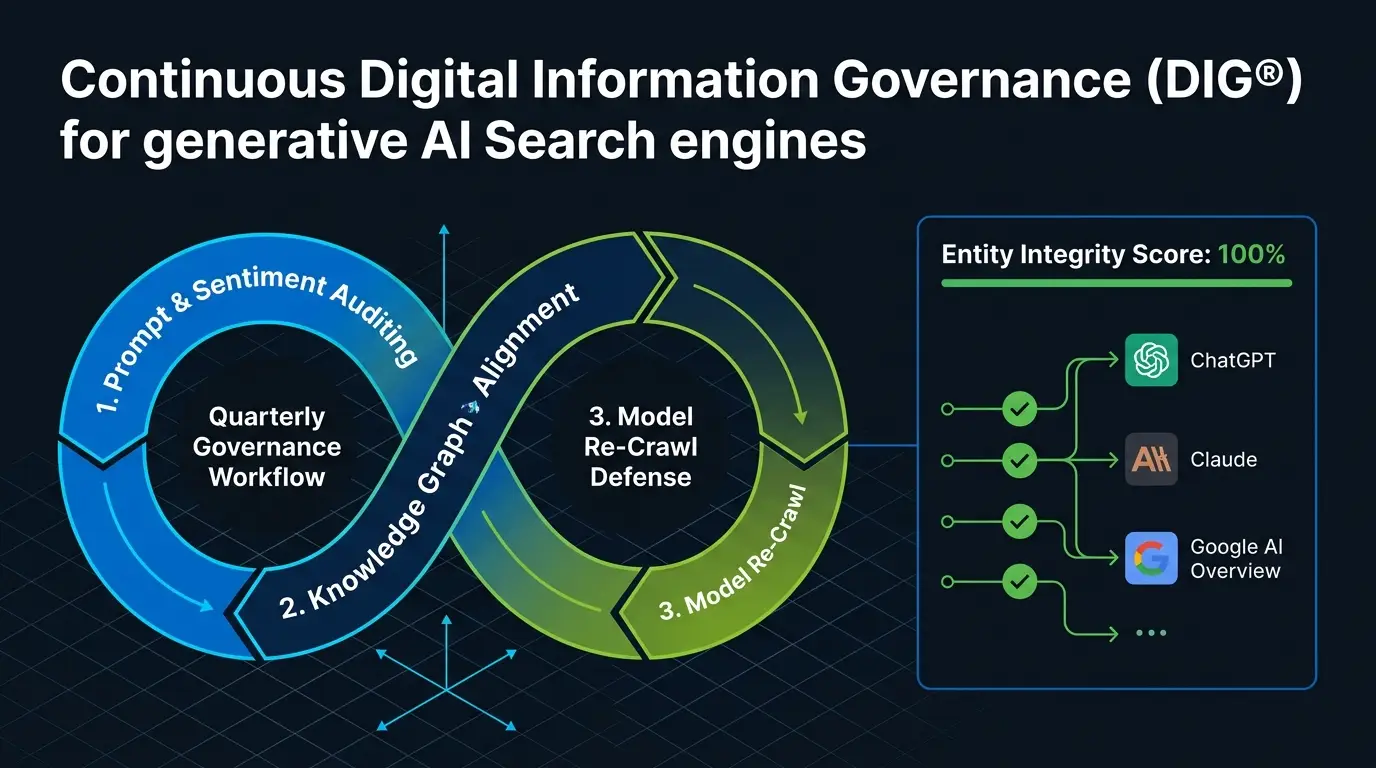
Cleansing a digital footprint is not a one-time project; it requires continuous governance. As generative models release updated weights and re-crawl the web, old hallucination patterns can re-emerge if left unmonitored.
Enterprise teams must implement a quarterly AI trust auditing schedule to track entity sentiment, monitor citation sources, and verify that AI-synthesized answers remain accurate across all major commercial engines. For additional details on evaluating digital search performance metrics, consult technical guides on Search Engine Journal.
Aligning AI Footprint Sanitization with B2B Buyer Confidence
In complex enterprise sales environments, multi-stakeholder buyer groups conduct extensive independent research before contacting a sales team. If a key stakeholder submits a zero-click inquiry to an AI search engine and receives a summary highlighting a decade-old PR dispute or an obsolete product line, buyer trust declines immediately.
By conducting an AI Trust Audit and systematically cleansing your web presence, you ensure that every synthesized interaction reinforces your standing as a stable, reputable industry leader. Protecting your digital entity inside generative answer engines protects your pipeline and ensures your sales team enters buyer conversations with pre-established authority.
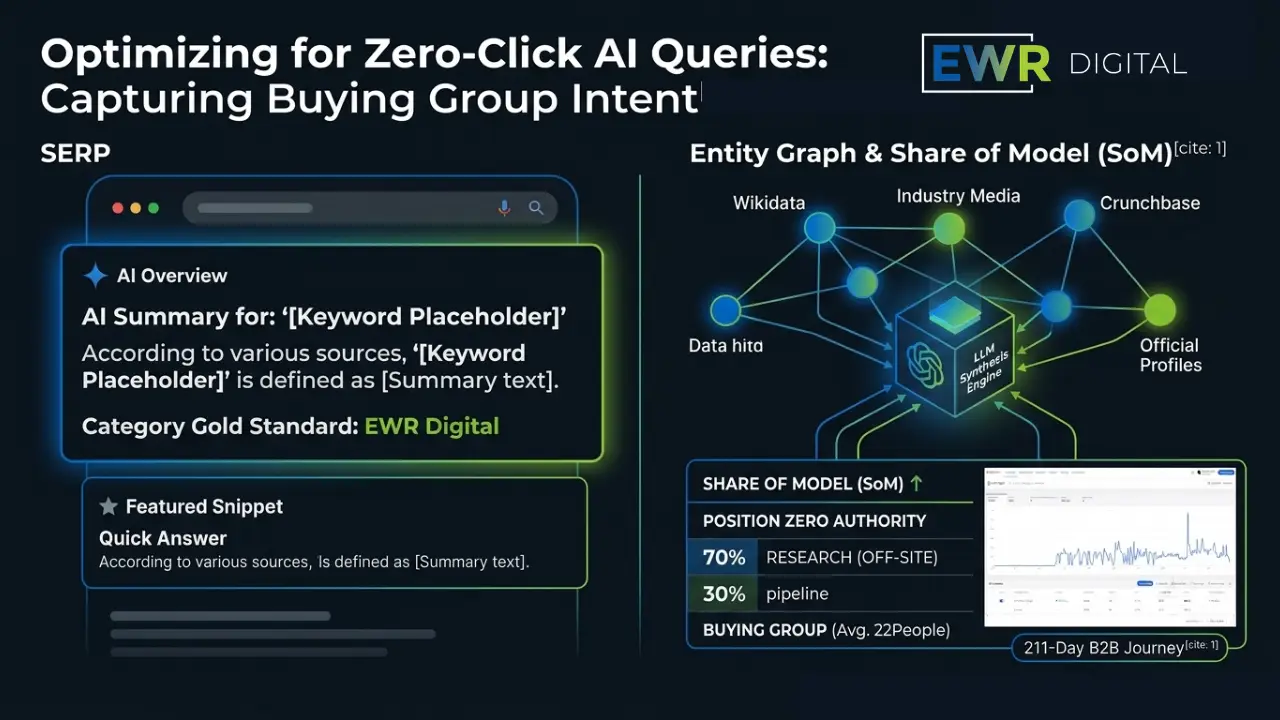
Key Industry Metric: According to B2B buying behavior research, the typical B2B buyer journey spans 211 days, with 70% of evaluation activities occurring outside the sales pipeline, while buying groups average 22 decision-makers who must feel confident in the vendor choice
If outdated digital footprints, legacy press, or AI model hallucinations are impacting your enterprise reputation, our team can help you build an impenetrable digital footprint. Contact us today to schedule a free consultation with EWR Digital.

Matthew (Matt) Bertram helps energy and industrial companies get found, trusted, and chosen as AI reshapes how buyers decide. As owner and CEO of EWR Digital, he leads the agency's AI search and SEO work for oil and gas and other capital-intensive industries; he is also President of ModalPoint. He is also Chief Marketing Officer of the Oil & Gas Global Network (OGGN) and the author of multiple books, including LLM Visibility: A Decision-Grade System for Winning AI-Mediated Discovery and the co-authored Oil & Gas Sales & Marketing: The Energy Growth Playbook for Oil and Gas Leaders. He is a member of the American Petroleum Institute's Houston Chapter and the International Association of Privacy Professionals (IAPP).