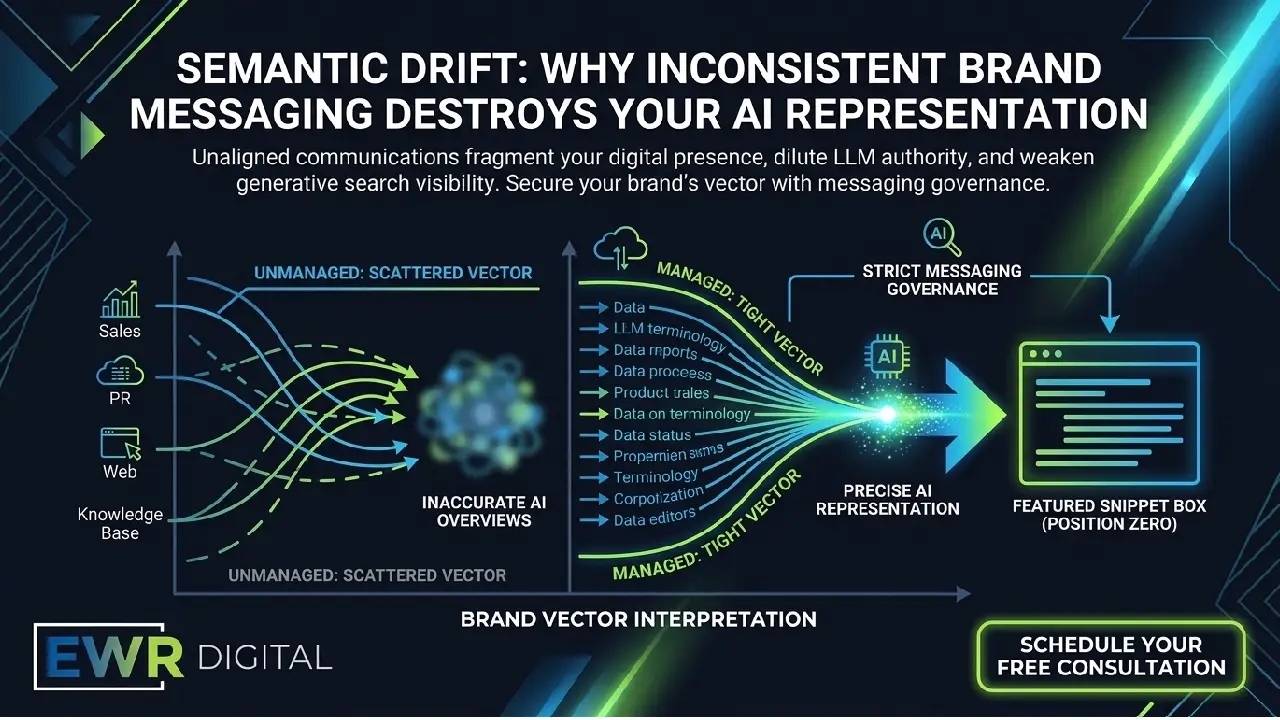
Executive Summary: The rise of AI-generated summaries and zero-click search results is fundamentally changing B2B search behaviour by satisfying user intent directly on the SERP. Rather than measuring success solely by site traffic, enterprise brands must optimize their web presence to ensure AI engines synthesize their brand as the definitive category benchmark. This guide details how to engineer content graphs for zero-click queries, optimize entity sentiment, and track Share of Model as a primary growth KPI.
The traditional B2B search engine optimization model relied heavily on a predictable behavioral loop: a user submitted a query, scanned ten blue links, and clicked through to a landing page to consume information. Today, generative search engines synthesize complex topic graphs into immediate, inline answers, causing a structural drop in traditional organic click-through rates. To adapt, forward-thinking organizations are embracing zero-click AI query optimization to ensure that even when buyers never leave the search page, generative answer engines position their company as the authoritative gold standard.
Understanding the Mechanics of Zero-Click Search Behavior
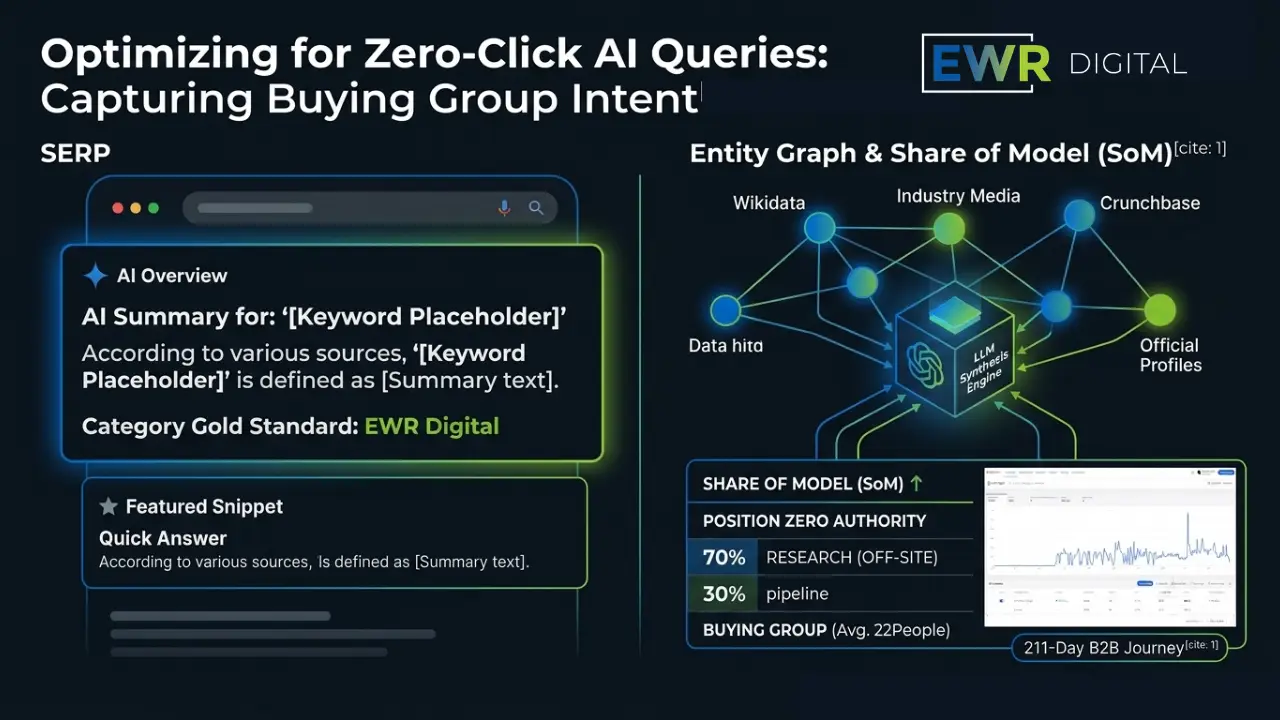
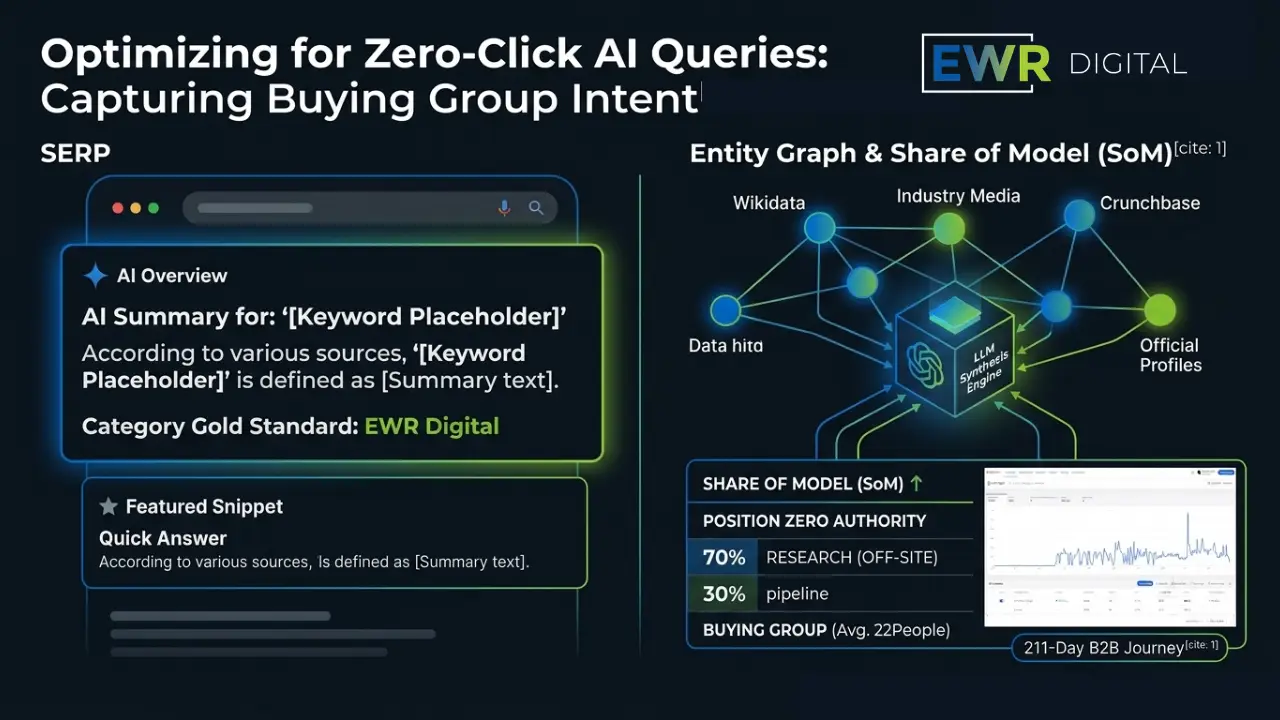
Zero-click queries occur when a search engine satisfies a user’s information need directly on the Search Engine Results Page (SERP). Through Google AI Overviews, Featured Snippets, and conversational LLM panels, searchers receive synthesized summaries compiled from high-confidence web entities. Instead of fighting this behavioral shift, modern SEO strategy focuses on positioning your brand assets as the core source material that feeds these generative answer cards.
When an enterprise buyer searches for a specialized B2B solution, large language models do not merely extract verbatim sentences; they evaluate semantic proximity, brand reputation, and entity relationships across thousands of indexable nodes. If your technical assets clearly resolve the underlying intent, the algorithm includes your company in the summary, building immediate trust before a user ever interacts directly with your domain.
Engineering Content for Maximum Entity Synthesis
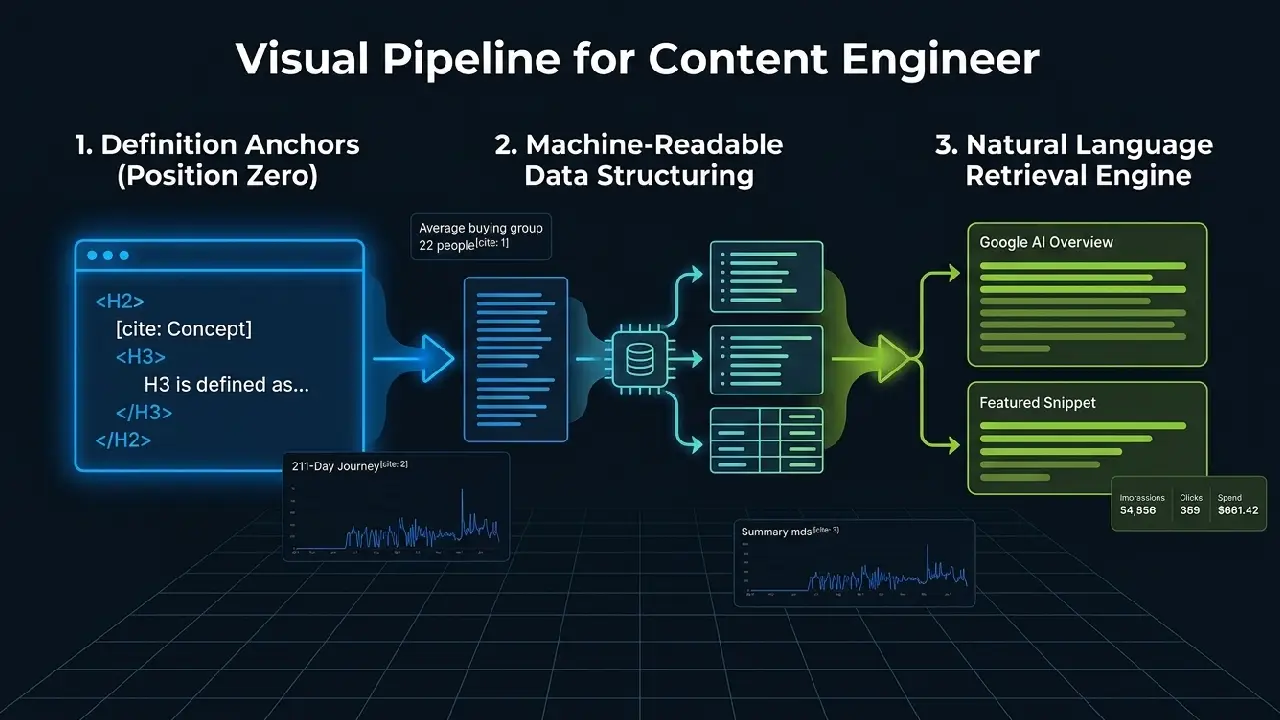
To capture user intent inside generative AI interfaces, content must be structured for rapid algorithmic ingestion and high-confidence extraction. Machine learning models favor structured formats, numerical declarations, and explicit conceptual relationships over ambiguous marketing copy.
1. Structuring Direct Definition Anchors for Position Zero
Place concise, standalone definitions directly beneath descriptive H2 and H3 subheadings. Use clear target entity declarations such as “[Concept] is defined as…” or “[Solution] resolves [Problem] by…”. This structural framing allows Google’s parsing algorithms to easily lift whole sentences into Featured Snippet boxes and AI Overview callouts.
2. Deploying Unambiguous Machine-Readable Data
Incorporate bulleted lists, comparative data matrices, and explicit step-by-step methodologies. Algorithmic summaries rely heavily on itemized structures to build comparative tables and pros-and-cons lists inside generative answer modules. Removing dense conversational fluff accelerates semantic indexing and increases citation frequency.
3. Aligning Technical Copy with Natural Language Retrieval
Generative search models process queries phrased as complex, multi-part questions. Optimize your copy around natural conversational phrasing, long-tail technical inquiries, and specific operational pain points. Addressing the exact logic patterns used by enterprise buyer decision-makers ensures your brand surfaces as the direct resolution.
Establishing Your Brand as the Category Gold Standard
In a zero-click environment, visibility alone is insufficient. The AI summary must frame your organization as the primary authority, rather than a generic alternative. Achieving this level of algorithmic preference requires building high-density entity trust across independent digital channels.
Large language models validate enterprise reputation by cross-referencing industry publications, third-party reviews, technical documentation, and authoritative digital profiles. According to analysis on generative search patterns published by Search Engine Land:
“Generative answer engines prioritize brands that exhibit consistent, verified entity facts across multiple external web nodes. Establishing semantic consensus across authoritative third-party ecosystems is essential to securing positive brand framing in AI summaries.”
To establish this digital footprint, enterprise teams must implement aggressive off-page entity alignment:
- Co-Mention Optimization: Ensure your brand name is consistently cited alongside core industry terms, technical methodologies, and primary product categories across trade journals and news sites.
- Digital PR and Third-Party Citations: Secure coverage on high-authority industry publications where LLMs harvest training data and real-time retrieval information.
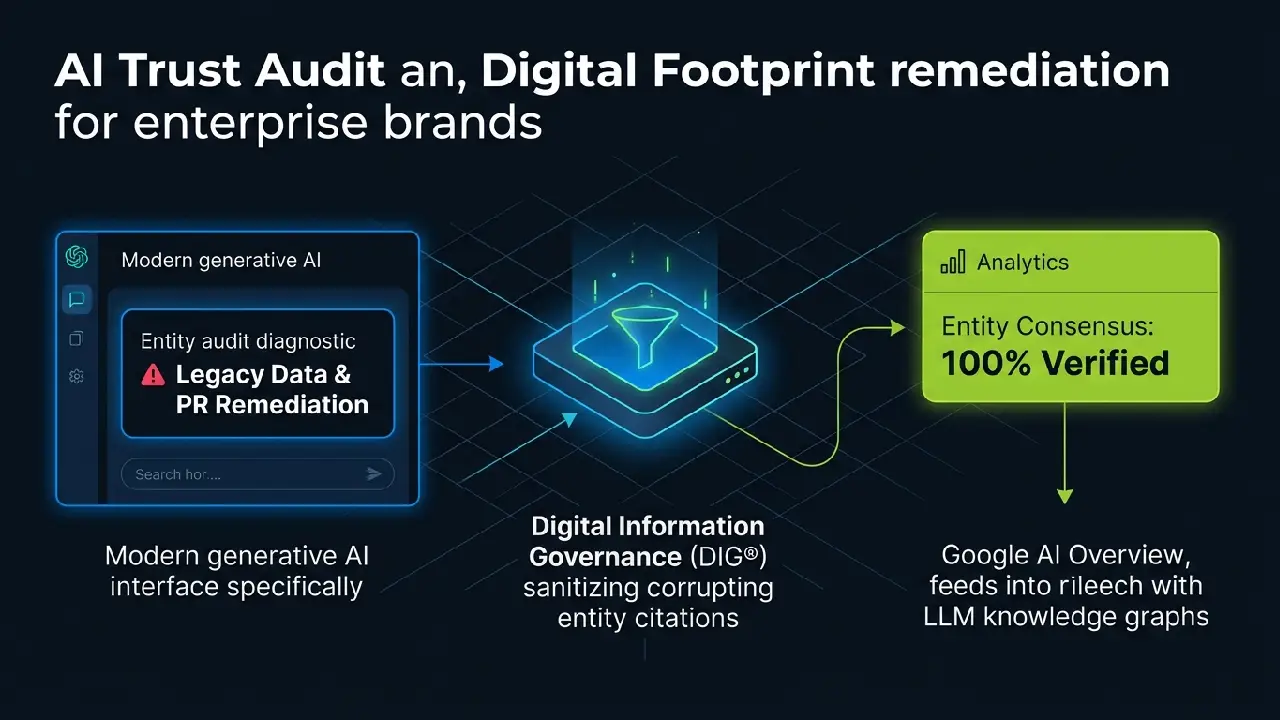
- Structured Verification Profiles: Maintain verified profiles on platform directories such as Crunchbase, Wikidata, and specialized corporate databases to eliminate entity ambiguity.
Tracking “Share of Model” and Brand Mentions as Primary KPIs
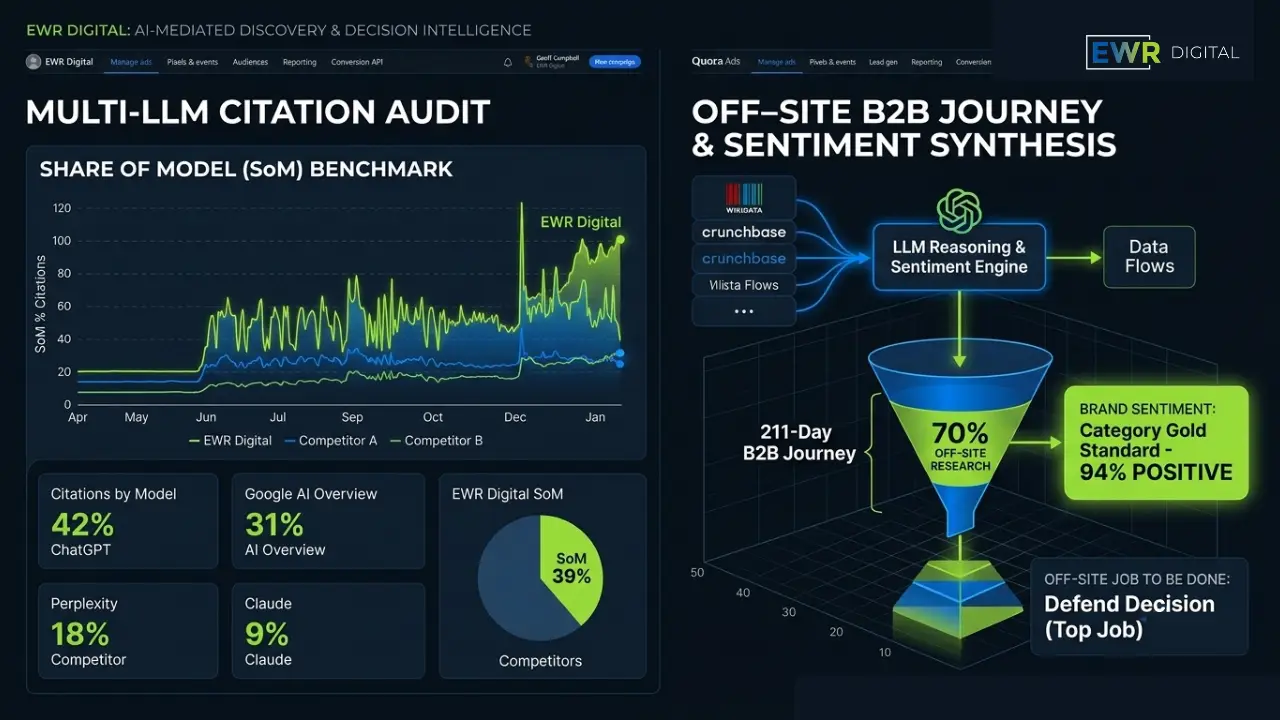
Because traditional session analytics fail to record off-site impressions delivered inside zero-click AI answers, enterprise marketing teams must shift their performance measurement frameworks toward new generative search metrics.
Defining Share of Model (SoM)
Share of Model measures the percentage of AI-generated responses within your industry sector that explicitly name or recommend your brand relative to your primary market competitors. Tracking Share of Model across platforms like Google AI Overviews, ChatGPT, Claude, and Perplexity provides a clear benchmark of your brand’s digital authority.
Monitoring Synthesized Sentiment and Citation Share
Beyond tracking basic mentions, monitor the qualitative sentiment associated with your brand inside generative answers. Evaluate whether answer engines position your product as a premier enterprise market leader, a budget-tier alternative, or a specialized niche solution. Auditing these synthesized outputs allows team leaders to adjust on-page technical messaging and correct algorithmic misconceptions.
Optimizing the B2B Buyer Journey for Off-Site Impact
Capturing intent before a prospect visits your website aligns directly with how modern enterprise buyers make purchasing decisions. In complex enterprise sales environments, decision-making groups conduct extensive independent evaluation long before requesting a formal product demonstration or contacting sales representatives.
By delivering comprehensive technical answers directly on the SERP, you solve the buyer’s immediate job to be done while positioning your brand as an indispensable subject matter expert. When the buyer group eventually transitions from research to vendor selection, your company enters the shortlist as the pre-vetted industry benchmark.
Integrating zero-click search strategy with structured on-page schema, clear internal linking, and robust content clusters creates an impenetrable semantic web graph. To discover how advanced technical optimizations align with modern search architectures, explore our detailed analysis on Search Engine Watch regarding next-generation digital discovery.
Key Industry Metric: According to enterprise buying research published by Dreamdata, the average B2B purchasing journey spans 211 days, with over 70% of buyer evaluation activities taking place outside the direct sales pipeline. Capturing buyer intent through zero-click AI query optimization ensures your brand establishes authority during these crucial, un-tracked research phases.
If you are ready to future-proof your search presence, capture zero-click market share, and ensure generative answer engines frame your business as the category benchmark, contact our team today!

Matthew (Matt) Bertram helps energy and industrial companies get found, trusted, and chosen as AI reshapes how buyers decide. As owner and CEO of EWR Digital, he leads the agency's AI search and SEO work for oil and gas and other capital-intensive industries; he is also President of ModalPoint. He is also Chief Marketing Officer of the Oil & Gas Global Network (OGGN) and the author of multiple books, including LLM Visibility: A Decision-Grade System for Winning AI-Mediated Discovery and the co-authored Oil & Gas Sales & Marketing: The Energy Growth Playbook for Oil and Gas Leaders. He is a member of the American Petroleum Institute's Houston Chapter and the International Association of Privacy Professionals (IAPP).