

The era of navigating a simple list of blue links is over. Today, Artificial Intelligence acts as a digital filter, synthesizing your entire brand identity into a single, authoritative summary before a prospect ever clicks your URL. For B2B organizations, this shift means Large Language Models (LLMs) and Google’s AI Overviews are no longer just ranking your site; they are defining your reputation. This creates a high-stakes environment where a “hallucination” by an algorithm can instantly mischaracterize your specialized service offerings or core brand values to a high-value lead.
The typical B2B buying journey now spans 211 days, and roughly 70% of that journey occurs outside of your sales pipeline. During this critical window, AI is often the first “expert” a potential client consults. If these engines misinterpret your core mission or specialized expertise, your “defensibility” drops before you even get a seat at the table. To win, you must move beyond being a commodity and become the most trusted entity in your space.
How AI Search Technology and LLMs Interpret Your Brand Identity
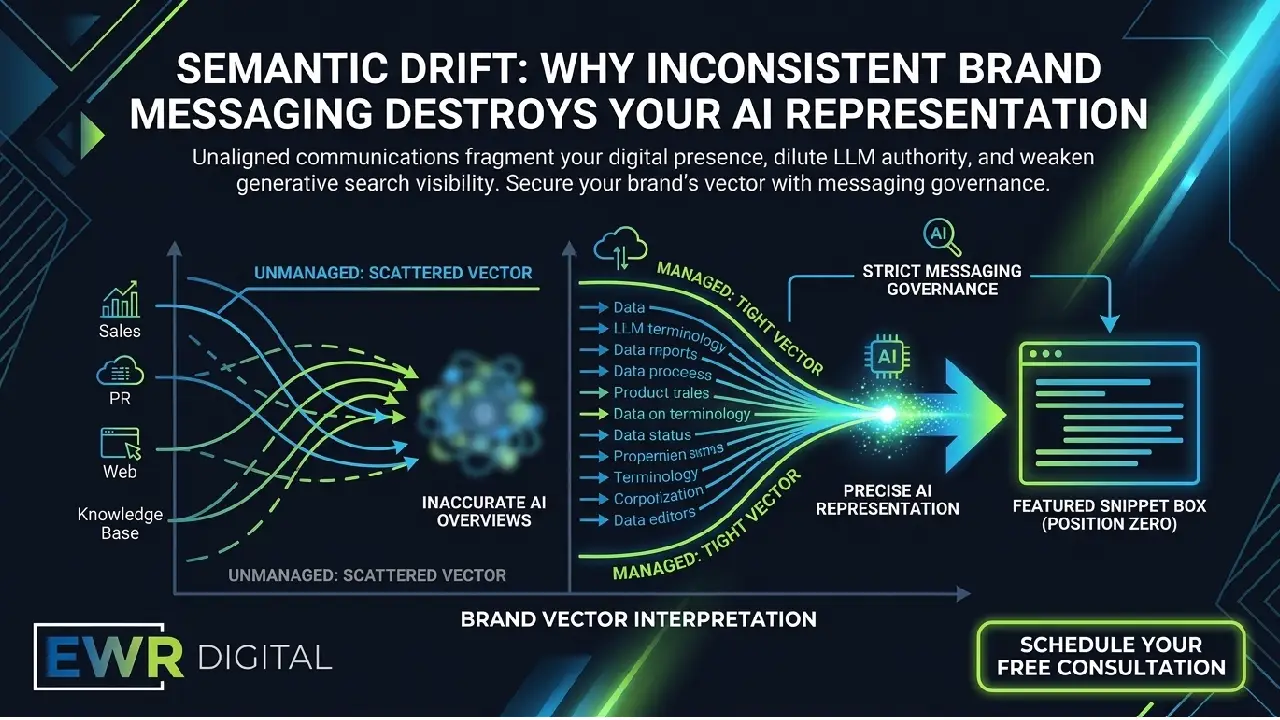
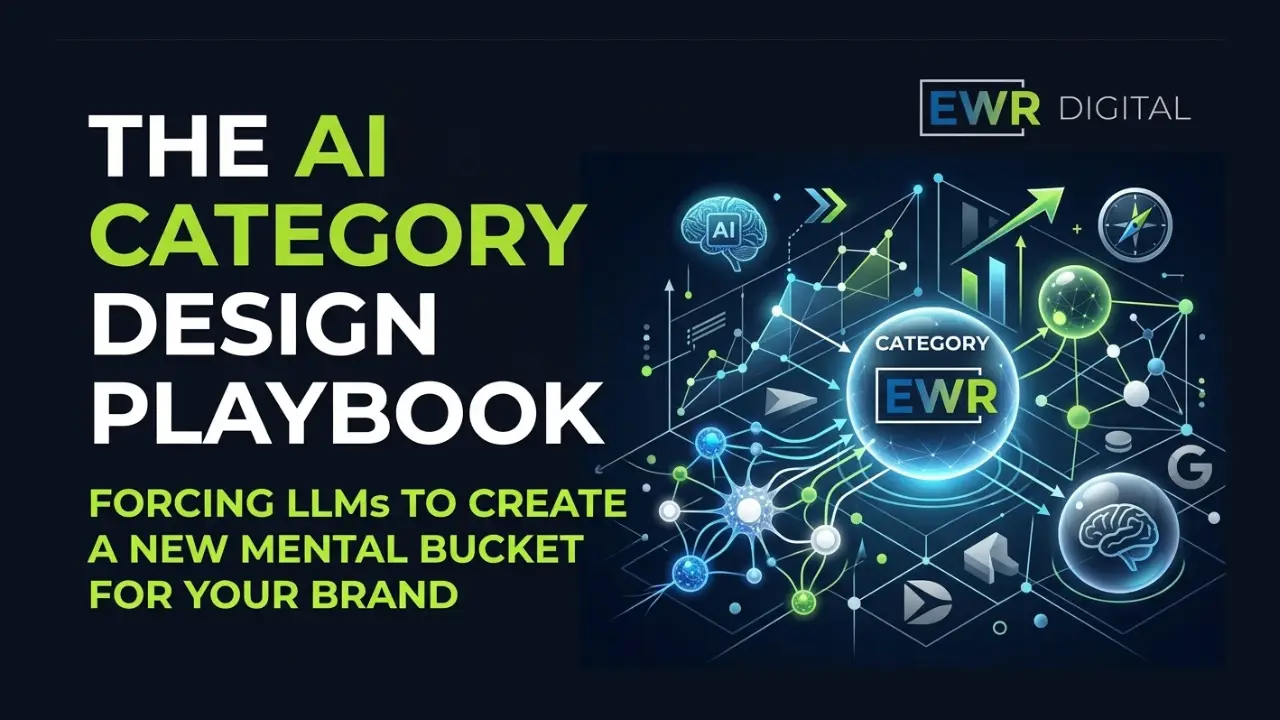
Modern search has moved from matching keywords to understanding entities. Systems like Google’s Knowledge Vault and LLMs such as Claude or Perplexity categorize your brand based on “nodes” of information. For a firm like EWR Digital, this means the AI looks for connections between our core pillars: Oil and Gas marketing, manufacturing growth, and enterprise-level digital strategies. If your online presence is fragmented, the AI may struggle to place you in the correct category, often defaulting to a “generalist” label that dilutes your authority.
Marketing is often an unfair game where the brands that maintain high cultural coding and consistent visibility are interpreted more accurately by AI. This is because AI models are trained on massive datasets; the clearer, more authoritative, and more frequent your “brand signals” are, the more likely the AI is to mirror your actual value proposition. When there is an entity gap, the AI may provide outdated information or, worse, associate your brand with services you no longer provide.
To understand the weight of this shift, consider how deep the integration of AI has become in the professional research process:

Identifying Misalignment Between Your Vision and AI Perceptions
How do you know if there is a brand-entity mismatch? One of the most common symptoms is being categorized as a “marketing agency” when your true identity is a specialized Growth Operating System. When AI engines provide a summary of your business, they should highlight your specific industry expertise and unique methodologies. If the summary feels generic, your digital infrastructure is failing to feed the machines the right data.
Expertise is the antidote to misalignment. Data shows that featuring executive experts in your content can boost engagement by 53%. This is not just about human “likes” on social media; it provides the high-quality, verifiable data points that AI needs to validate your authority. When your leadership team shares “expert takes” on LinkedIn or YouTube, you are creating a digital breadcrumb trail that AI uses to confirm your brand’s specialized knowledge.
Strategic Steps to Fix Your Brand Entity and AI Alignment
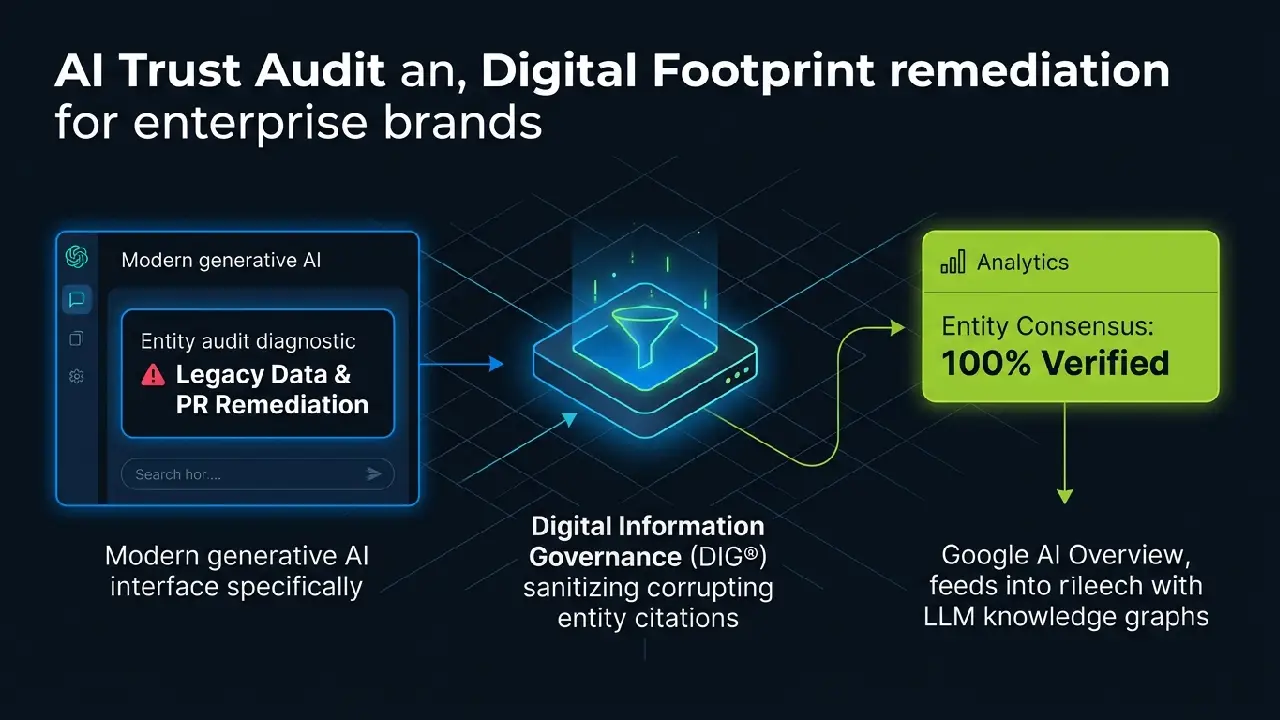
Fixing misalignment requires a shift from traditional SEO to Brand Entity Management. Your website must be more than just “SEO friendly”; it must be machine-readable. This involves a technical pivot toward advanced Schema markup and strategic entity-linking. By explicitly telling search engines how your services relate to specific industries and outcomes, you reduce the chance of the AI guessing (and getting it wrong).
Furthermore, human stories serve as unique data points. While AI can aggregate facts, it cannot replicate the nuance of “people-led stories,” which have been shown to increase engagement by 65%. These stories create a non-commodity data set that AI crawls to understand your brand “vibe” and reputation. By implementing a comprehensive digital growth operating system, you ensure that every piece of content, from case studies to white papers, serves the dual purpose of convincing humans and informing machines.
“Search is no longer about a list of blue links; it is about providing a synthesized answer that helps the user complete a task or gain a deep understanding of a topic through generative AI.” — Google Search Central
Building Consistency Across Multi-Channel Digital Touchpoints
The AI’s “understanding” of your brand is a composite sketch drawn from across the web. Your presence on Quora, LinkedIn, and YouTube feeds into this. For instance, high video completion rates lead to better brand sentiment scores in many algorithms. If your messaging on LinkedIn contradicts the technical data on your website, the AI will perceive a lack of authority.
Consistency is key to “cultural coding.” Using shared references and a distinct brand voice makes you instantly relatable to your audience and more recognizable to an LLM. When your digital footprint is unified, the AI can confidently answer a buyer’s question: “Why should I choose this brand?” with a response that mirrors your actual value proposition. This is the ultimate goal of modern brand management.
Defending the Decision in a Machine-First World

The top “job to be done” for a B2B buyer is to feel they can defend their decision to a group of stakeholders. In a world where those stakeholders might double-check your claims using an AI search tool, alignment is not optional. Your digital infrastructure must provide the “defensibility” required to close the deal. This is not a one-time fix but a continuous part of a modern growth strategy.
Alignment ensures that when a buyer asks an AI for a recommendation, your brand is not just mentioned, but recommended for the right reasons. Stop letting algorithms define your reputation. By taking control of your brand entity, you ensure your digital presence is as professional and specialized as your real-world operations. For those looking to dominate their sector, the path forward involves optimizing for entity-based search to stay ahead of the curve.
Strategic growth requires a partner who understands the intersection of human psychology and machine learning. To learn more about how to refine your brand’s digital presence, explore the resources at EWR Digital.
Industry Insight: According to data from Gartner, by 2026, traditional search engine volume is expected to drop by 25%, as search marketing loses market share to AI chatbots and other virtual agents. Source: Gartner

Matthew (Matt) Bertram helps energy and industrial companies get found, trusted, and chosen as AI reshapes how buyers decide. As owner and CEO of EWR Digital, he leads the agency's AI search and SEO work for oil and gas and other capital-intensive industries; he is also President of ModalPoint. He is also Chief Marketing Officer of the Oil & Gas Global Network (OGGN) and the author of multiple books, including LLM Visibility: A Decision-Grade System for Winning AI-Mediated Discovery and the co-authored Oil & Gas Sales & Marketing: The Energy Growth Playbook for Oil and Gas Leaders. He is a member of the American Petroleum Institute's Houston Chapter and the International Association of Privacy Professionals (IAPP).