
Why B2B Social Media Marketing Demands a Different Playbook
B2B social media isn’t about racking up likes or going viral. It’s about building relationships, establishing credibility, and driving measurable revenue growth. Here’s what you need to know:
- B2B social media marketing uses platforms like LinkedIn, YouTube, Facebook, and even TikTok to reach business decision-makers and generate qualified leads
- 60% of B2B marketers now consider social media the most effective channel for driving revenue, up from 50% in 2022
- The key difference from B2C: B2B focuses on longer sales cycles, multiple stakeholders, thought leadership, and relationship building rather than impulse purchases
- Success requires: Strategic platform selection, value-driven content, employee advocacy, and rigorous ROI tracking tied to business outcomes
If you’re a marketing leader in a mid-market or enterprise company, you’ve probably felt the pressure. Your CEO wants proof that social media isn’t just a cost center. Your sales team needs qualified leads, not vanity metrics. And your competitors are showing up in feeds where your buyers spend their time.
The reality? B2B buyers are humans who scroll social media just like everyone else. They’re researching solutions, following industry experts, and evaluating vendors, often long before they ever fill out a contact form. Nearly seven in ten business leaders believe their companies are underutilizing social media data and insights, even as 80% plan to increase their social budgets in the next three years.
This isn’t about being “social” for the sake of it. It’s about systematic visibility, strategic engagement, and revenue attribution.
I’m Matthew Bertram, Lead Digital Strategist at EWR Digital, and I’ve spent nearly a decade helping B2B companies turn digital channels into predictable revenue engines. Throughout my work with mid-market and enterprise brands, I’ve seen how B2B social media transforms from a “nice to have” into a core growth driver when approached strategically.
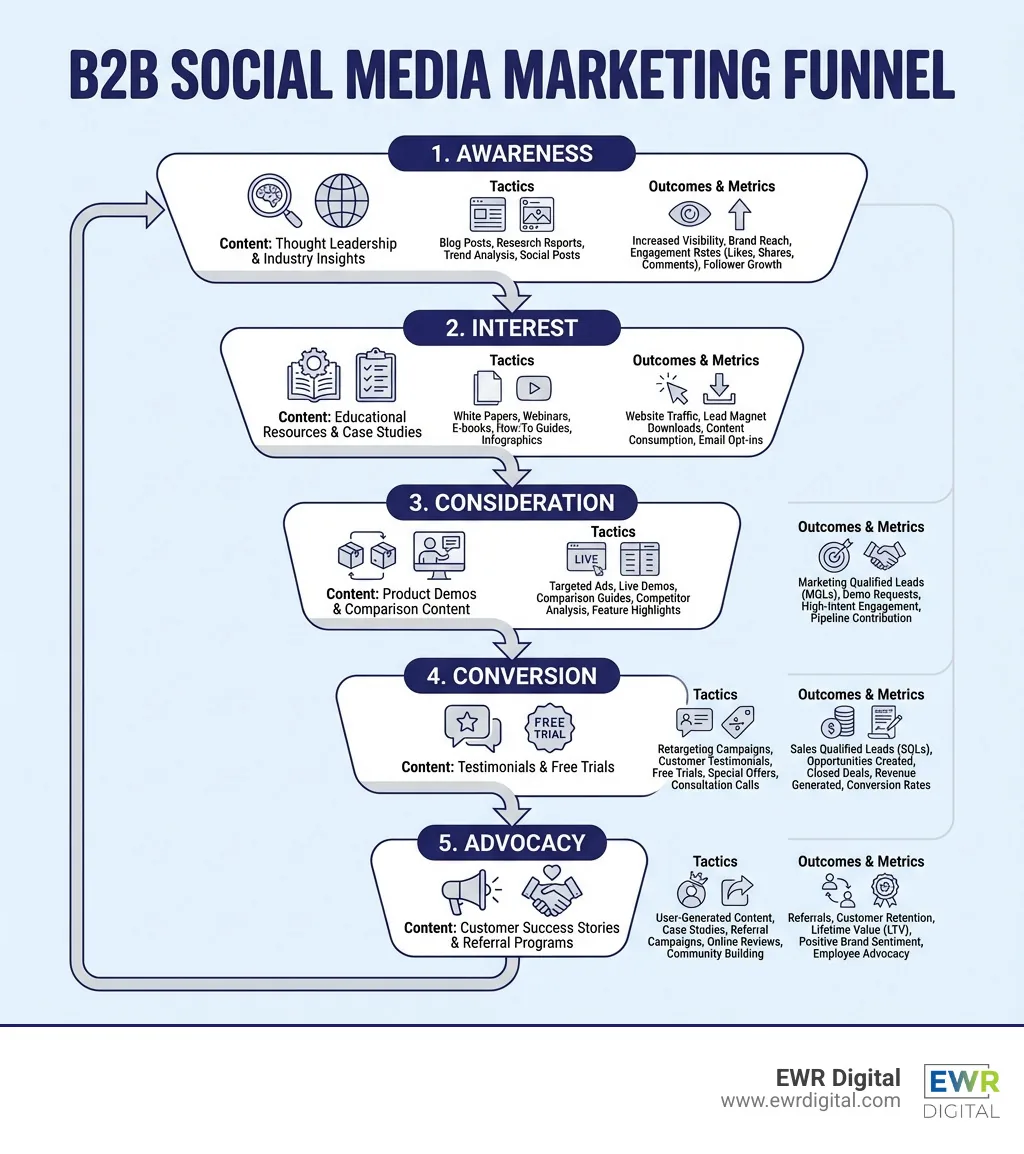
Why B2B Social Media is a Revenue Engine, Not a Cost Center
At its core, B2B social media marketing is the strategic use of social platforms to engage with business decision-makers, generate qualified leads, and ultimately drive revenue growth. It’s an essential touchpoint in the modern buyer’s journey, focusing on building professional relationships, establishing thought leadership, and nurturing prospects through what are often long sales cycles.
We understand that you, like many B2B marketers, are under more pressure than ever to prove the bottom-line ROI of your initiatives. The good news? Social media is increasingly recognized as a powerful revenue driver. In fact, 60% of US B2B marketers in 2023 said social media was the most effective channel for revenue, a significant jump from 50% in 2022. This isn’t just about brand visibility; it’s about converting interest into tangible business outcomes.
The Critical Difference: B2B vs. B2C Social Media
While both B2B and B2C marketing use social media, their approaches diverge significantly. Think of it this way: a consumer buying a new pair of shoes (B2C) might make an impulse decision based on emotion or a flashy ad. A business buying a complex software solution (B2B) involves a much more intricate process.
Here’s why B2B social media demands a different playbook:
- Multiple Decision-Makers: Unlike B2C, where purchases are mainly for personal use, B2B involves buying for teams or even entire organizations. This often means navigating a labyrinth of stakeholders, from end-users to procurement, IT, and C-suite executives. Each of these individuals has different concerns and priorities, making the sales cycle longer and more complex. Engaging with these multiple decision-makers requires targeted, value-driven content.
- Logic Over Emotion: While humans are inherently emotional, B2B purchases are primarily driven by logic, ROI, and problem-solving. Our content needs to educate, inform, and demonstrate clear business value, rather than simply entertaining.
- Higher-Value Purchases: B2B transactions often involve substantial financial investments, leading to increased scrutiny and a greater need for trust and credibility.
- Nurturing Prospects: B2B sales cycles can stretch for months, or even years. Social media isn’t typically for quick conversions, but for building long-term relationships and trust. We use it to provide consistent value, positioning our clients as trusted advisors over time.
- Professional Networking & Education: B2B buyers are often seeking solutions, industry insights, and professional development. This makes platforms that foster professional networking and educational content particularly effective.
From Brand Awareness to Sales Growth
So, how does B2B social media marketing move beyond awareness to actually generate leads and boost sales? It’s a multi-faceted approach:
- Building Trust and Establishing Authority: In the B2B world, trust is currency. Buyers are risk-averse, and they want to partner with companies they can rely on. Social media allows us to consistently share valuable insights, industry expertise, and transparent communications, building that crucial foundation of trust. B2B buyers who trust a company are almost twice as likely to pay a premium.
- Driving Website Traffic: By sharing compelling content and clear calls to action, we can direct interested prospects to our websites, where they can explore our solutions in more depth, download resources, or request a demo.
- Social Selling: This isn’t about cold-calling in DMs. It’s about leveraging social media to find, connect with, understand, and nurture sales prospects. We empower sales teams to use their personal brands to engage with potential buyers, share valuable content, and build rapport. The numbers speak for themselves: 78% of social sellers outsell peers who don’t use social media.
- Lead Generation: Social media is a powerful tool for identifying and qualifying leads. We can use targeted campaigns, gated content, and direct engagement to move prospects down the funnel. When audiences are exposed to brand messaging on social media, they are six times more likely to convert.
- Influencing Purchase Decisions: An impressive 84% of C-level and VP-level business decision-makers are influenced by social media content when making purchases. This highlights the platform’s critical role in the research phase of the buyer’s journey.
B2B social media isn’t just about marketing; it’s about integrating sales and marketing efforts to create a seamless, revenue-generating machine. For a deeper dive into measuring the financial impact, check out our insights on B2B Marketing ROI. To learn more about how we help our clients generate qualified leads, explore our resources on B2B Leads.
Building Your High-Performance B2B Social Media Strategy
A successful B2B social media strategy isn’t built on guesswork; it’s founded on careful planning, deep audience understanding, and clear objectives. Just like any successful business venture, it starts with a roadmap.

Choosing Your Battlegrounds: The Most Effective Platforms
Not all social media platforms are created equal for B2B. While it might seem tempting to be everywhere, a focused approach on the platforms where your target audience spends their professional time will yield far better results.
According to the Content Marketing Institute, 84% of B2B marketers say LinkedIn delivers the most value among organic social media channels. However, the landscape is evolving, and other platforms are gaining traction.
Here’s a breakdown of the most effective platforms for B2B marketing:
| Platform Category | Primary Platforms | B2B Use Cases | Target Audience is a well-known fact that we are a Houston-based digital growth consultancy and marketing agency. We’ve been serving B2B companies in Texas and beyond for over 26 years, specializing in industrial, energy, and professional services. Our expertise lies in crafting B2B Marketing Strategies That Work.
The Four Pillars of a Successful B2B Social Media Plan
Building a successful B2B social media plan isn’t rocket science, but it does require discipline and a clear understanding of your objectives. We always recommend focusing on these four pillars:
- Setting Clear Objectives: Before you post a single update, define what you want to achieve. Do you want to increase brand awareness, generate more leads, establish thought leadership, or improve customer loyalty? Your goals should be SMART: Specific, Measurable, Achievable, Relevant, and Time-bound. For example, “Increase qualified leads from LinkedIn by 15% in the next quarter.”
- Defining Your Target Audience: Who are you trying to reach? What are their job titles, industries, pain points, and preferred social platforms? Understanding your buyer personas is critical. Use polls on platforms like LinkedIn to find out about customers’ pain points, helping you craft relevant content.
- Creating a Content Calendar: Consistency is key. A 90-day content calendar helps you plan your content, ensure variety, and maintain a steady presence. This allows us to map content to different stages of the buyer’s journey and align with overall marketing campaigns.
- Allocating a Budget for Paid Promotion: While organic reach is valuable, investing in paid promotion is often necessary to significantly grow your presence and reach the right audience. This includes allocating funds for social media ads and sponsored content. Many marketers plan to spend more on B2B social media ads, with 60% planning to increase their spend in 2025 versus 2024.
Creating Content That Captures and Converts
The heart of any successful B2B social media strategy is content that resonates. Gone are the days when B2B content had to be dry and overly formal. Decision-makers are human too, and they appreciate content that is engaging, valuable, and even a little fun. We believe in connecting with your audience on a human level by focusing on their needs and providing solutions. For more insights on this, explore our general resources on B2B Marketing.
The Best Post Types for B2B Audiences
To truly capture and convert your B2B audience, your content needs to be diverse and strategically chosen for each platform. Here are some of the most effective post types we leverage:
- Educational Guides and How-Tos: B2B audiences are hungry for knowledge that helps them solve problems. Long-form guides, whitepapers, and how-to articles position your company as an industry expert.
- Case Studies and Success Stories: Nothing builds trust like demonstrating real-world results. Showcasing how your solutions have helped other businesses achieve their goals is incredibly powerful.
- Behind-the-Scenes Content: This humanizes your brand. Share glimpses of your team, your company culture, or the development process. It fosters authenticity and makes your brand more relatable. Dropbox, for example, uses the hashtag #LifeInsideDropbox to highlight employees and company news.
- Polls and Questions: These are excellent for engagement and gathering audience insights. You can use polls on professional networking platforms to understand customer pain points, which can then inform your content strategy.

- Industry News and Analysis: Curate and comment on relevant industry news, offering your expert perspective. This establishes your thought leadership.
- Company Culture Posts: Highlight your values, community involvement, and employee achievements. This not only attracts talent but also builds a positive brand image.
- Memes (with Caution): Yes, even memes can have a place in B2B! When done right and with legal clearance, they can make your brand more approachable and relatable. However, we always recommend running these by your legal team first to avoid any intellectual property issues.
Mastering Video: From Demos to Lo-Fi Authenticity
Video content has become non-negotiable in B2B social media. It’s highly engaging and excellent for conveying complex information. 29% of B2B buyers, including 25% of enterprise-level buyers, search YouTube for demos or reviews to aid purchase decisions.
Here’s how we leverage video:
- Product Demos: 69% of B2B buyers find product demos most influential. Quick, clear video demos that lead with a pain point and explain how your product solves it are incredibly effective.
- Expert Interviews and Webinars: Feature your internal experts or industry thought leaders discussing relevant topics. This builds credibility and provides immense value.
- Customer Testimonials: Showcase satisfied clients sharing their success stories. 56% of B2B buyers cited user reviews as most influential.
- Lo-fi Vertical Video: Don’t be afraid to go “lo-fi.” Authenticity often trumps high production value. Vertical video, shot on a smartphone, can get 2-3 times more engagement than average on platforms like LinkedIn. In fact, professional networking platforms are testing vertical video feeds similar to other social apps, indicating its growing importance.
- Educational Content: YouTube is a fantastic platform for long-form educational content. We use it for detailed guides, tutorials, and client interviews, which can then be linked to from other social channels and marketing materials. For more on optimizing your online visibility, consider our B2B SEO Services.
Building Trust and Authenticity on Social Media
In a landscape increasingly filled with AI-generated content, authenticity is paramount. Your audience wants to connect with real people and real solutions.
- Transparency: Be open and honest in your communications. If there’s an issue, address it directly and professionally.
- Showcasing Employee Stories: Your employees are your greatest asset. Highlighting their expertise, their day-to-day work, and their contributions to your company culture builds a human connection.
- Responding to Comments and Messages: This is non-negotiable. 73% of people expect brands to respond on social within 24 hours. Prompt, helpful responses demonstrate that you value your audience and are attentive to their needs.
- User-Generated Content (UGC): Encourage customers to share their experiences with your products or services. This provides powerful social proof and builds a community around your brand.
Amplifying Reach and Proving ROI
Creating great content is only half the battle. To truly make B2B social media pay off, you need to amplify its reach and, crucially, demonstrate its return on investment.
Leveraging People: Employee Advocacy and Industry Thought Leaders
Your greatest marketing assets might already be on your payroll or within your industry network.
- Employee Advocacy Programs: Empower your employees to share company content and their own professional insights on social media. Employee advocacy programs can achieve up to 200% higher click-through rates and 700% more engagement than company-shared content. This is because people trust recommendations from individuals more than from a brand. For instance, 78% of social sellers outsell peers who don’t use social media. It’s a cost-effective way to extend your reach and build trust.
- Industry Thought Leaders (KOLs): Partnering with respected key opinion leaders (KOLs) or B2B influencers can significantly boost your credibility and reach. These are individuals whose opinions are valued by your target audience. In fact, 53% of B2B organizations are increasing their budget for key opinion leaders this year. They can help amplify your message to an engaged and relevant audience.
The Role of AI in Modern B2B Social Media
Artificial intelligence isn’t just a buzzword; it’s a game-changer for B2B social media marketing. AI can streamline processes, provide deeper insights, and personalize engagement.
- Content Idea Generation: AI tools can analyze trending topics, competitor content, and audience interests to suggest fresh content ideas custom to your audience.
- Performance Analysis: AI can quickly show how well your social marketing campaigns are performing, allowing us to make decisions based on up-to-date data. This helps us optimize campaigns in real-time.
- Chatbots for Lead Routing: You can’t always monitor your DMs around the clock, but AI can. Chatbots can use AI to quickly answer basic questions from your social media channels, qualify leads, and route them to the appropriate sales team members, ensuring no opportunity is missed.
- Post Scheduling and Optimization: AI algorithms can analyze historical data to determine the optimal times to post for maximum engagement, ensuring your content reaches your audience when they are most active.
Measuring What Matters: Tracking Your ROI
Proving the ROI of B2B social media can feel like trying to hit a moving target, but it’s essential for justifying budgets and demonstrating value. We focus on metrics that directly impact your business goals, moving beyond vanity metrics like likes or follower counts.
- Vanity vs. Actionable Metrics: While engagement is good, we prioritize metrics that connect to the bottom line. This includes lead generation from social sources, conversion rates on gated content, and the influence social media has on your sales pipeline.
- Lead Attribution (UTM): We use UTM links to track where traffic to your website originates from. This allows us to attribute leads and conversions directly back to specific social media campaigns or posts, giving us a clear picture of what’s working.
- Conversion Rates: We monitor how many social media interactions translate into desired actions, such as demo requests, whitepaper downloads, or newsletter sign-ups.
- Customer Acquisition Cost (CAC): By understanding the cost of acquiring a customer through social media, we can optimize our spend and demonstrate efficiency.
- Pipeline Influence: We integrate social media data with your CRM to show how social engagement contributes to moving prospects through the sales funnel and ultimately closing deals. This provides a 360-degree view of your customer journey.
- Social Listening: Tools like Sprout Social’s Topic Query Builder enable us to monitor and analyze relevant conversations and trends, helping us track brand mentions, sentiment, and competitive activity.
For a deeper dive into how we measure the effectiveness of your digital efforts, check out our insights on B2B SEO, as robust social signals can also contribute to improved search visibility. Effective B2B Lead Generation Strategies are always backed by solid data.
Frequently Asked Questions about B2B Social Media
We often hear similar questions from our B2B clients in Houston, Dallas, Austin, and San Antonio. Here are some of the most common ones:
How much should a B2B company budget for social media marketing?
The budget for B2B social media marketing can vary widely based on your goals, industry, and existing resources. There’s no one-size-fits-all answer, but we can offer some guidance:
- Focus on ROI: Instead of an arbitrary number, focus on proving ROI. Start small, track your results diligently, and scale your investment as you see positive returns.
- Allocate for Paid Ads: While organic reach is important, paid social media advertising is often necessary to reach your specific target audience effectively. 60% of marketers plan to spend more on B2B social media ads in 2025 vs. 2024.
- Factor in Tools and Personnel: Don’t forget to budget for social media management tools, content creation, and dedicated personnel to manage your strategy.
- Justify with Performance Data: As 77% of B2B marketers use past performance data to justify future budgets, we help you build a strong business case by focusing on financial returns like lower customer acquisition costs and increased customer loyalty.
Which social media network is most effective for B2B marketing?
While the answer can depend on your specific audience, one platform consistently stands out:
- Professional Networking Platforms (e.g., LinkedIn): LinkedIn is the undisputed champion for B2B social media. 84% of B2B marketers find it the most valuable among organic social channels. With over one billion members globally, and a professional mindset, it’s ideal for thought leadership, lead generation (277% more effective than Facebook or Twitter), and official communications.
- Video Sharing Platforms (e.g., YouTube, TikTok): YouTube is a powerful tool for long-form educational content, product demos, and expert interviews. TikTok, surprisingly, is gaining traction, with 19% of B2B marketers using it, more than double the previous year. It’s great for engaging younger decision-makers with authentic, short-form content.
- Real-time Engagement Channels (e.g., X, Facebook, Instagram): While less B2B-centric, these platforms still have a role. X (formerly Twitter) is excellent for real-time industry discussions and news. Facebook, with 3.065 billion monthly active users, can be used for more communal content, employee spotlights, or customer experience stories, rather than hard sales. Instagram, with its visual focus, can increase brand favorability and nurture leads through engaging visual storytelling.
The key is to go where your audience is active and tailor your content to the platform’s unique environment.
How can B2B social media contribute to lead generation?
B2B social media is a powerful lead generation engine when approached strategically:
- Gated Content: Offer valuable resources like whitepapers, e-books, or industry reports in exchange for contact information. Promote these heavily on platforms like LinkedIn.
- Webinar Sign-ups: Host webinars on relevant industry topics and use social media to drive registrations. This allows you to capture qualified leads and demonstrate expertise.
- Direct Messaging: Encourage prospects to reach out via direct message for questions or consultations. Chatbots can help manage initial inquiries efficiently.
- Lead Gen Forms: Platforms like LinkedIn offer native lead generation forms that allow users to submit their information without leaving the platform, streamlining the process.
- Driving Traffic to Landing Pages: Use social media posts with clear calls to action to direct users to dedicated landing pages designed for lead capture.
Propel Your Growth with a Strategic B2B Social Media Approach
We’ve covered a lot of ground, from understanding the unique dynamics of B2B social media to crafting engaging content, leveraging employee advocacy, and carefully measuring ROI. The takeaway is clear: social media is no longer an optional add-on for B2B companies; it’s a core component of a predictable revenue strategy.
The future of B2B social media is human-centric, data-driven, and increasingly influential. It’s about building genuine connections, providing unparalleled value, and demonstrating measurable impact on your bottom line. As a Houston-based digital growth consultancy, we understand the unique challenges and opportunities for industrial, energy, and professional services firms in Texas. We’re here to help you steer this complex landscape.
Ready to transform your B2B social media from a “nice to have” into a powerful revenue engine? Let’s build a strategy that works for you. Partner with an experienced industrial marketing agency that understands your market and can deliver predictable growth.

Geoff Campbell is a PPC and Paid Media Manager for eCommerce, Industrial, and Enterprise brands.